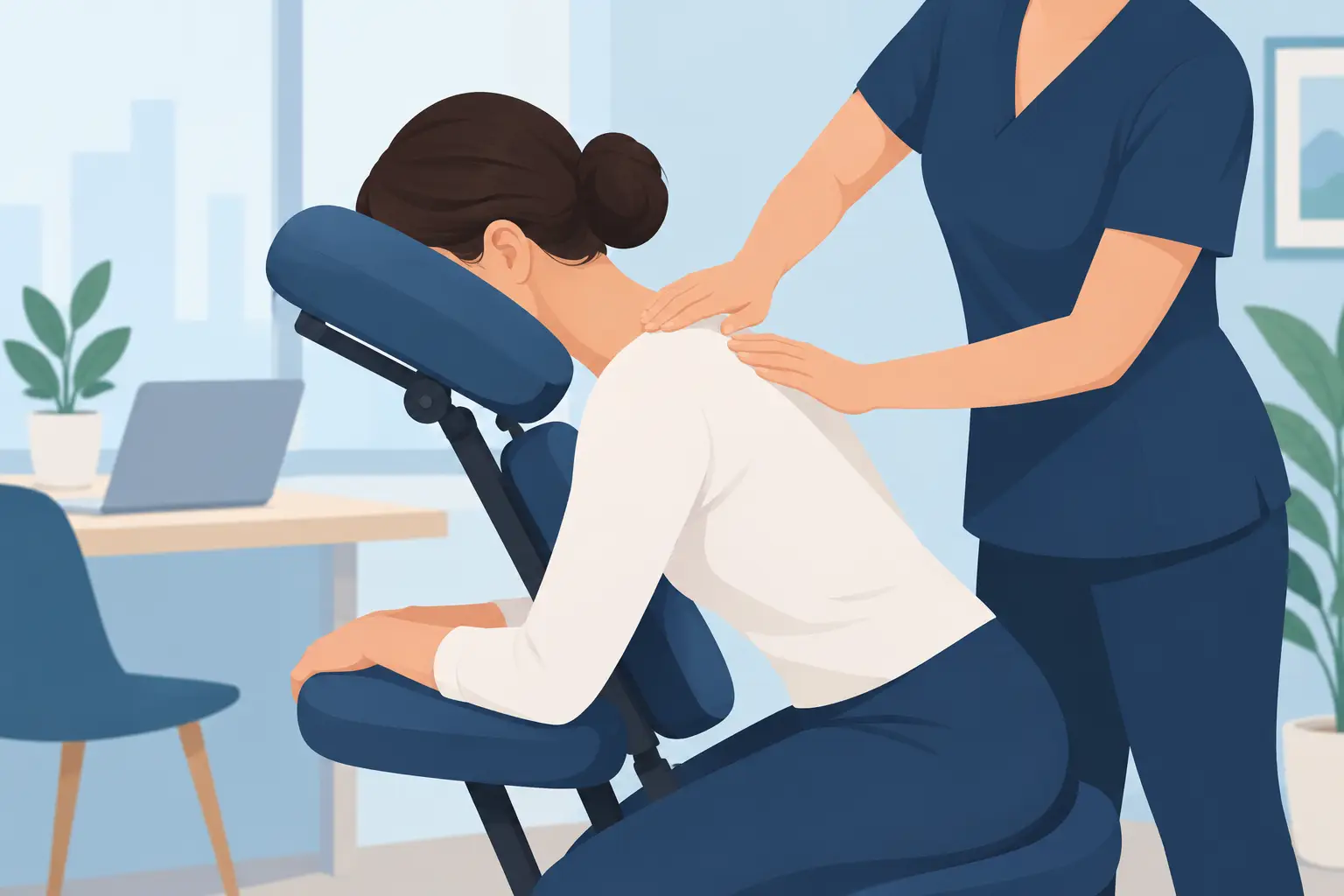
A workday can look polished from the outside: a focused calendar, a laptop, a beautifully organized desk. By late afternoon, however, the body often tells a different story. The shoulders creep upward, the neck feels restricted, and a persistent ache settles between the shoulder blades or across the lower back. So, can massage help desk pain? For many people, it can offer meaningful relief when muscle tension, static posture, and repetitive screen-based work are contributing to discomfort.
Massage is not a replacement for medical care or an ergonomic setup, but it can be a highly effective part of a more considered wellness routine. Expert touch addresses the physical strain that accumulates quietly across long days, while creating the rare opportunity to step away from constant demands and restore a sense of ease.
Why desk work can feel so demanding on the body
Desk pain is rarely caused by sitting alone. It is usually the combination of stillness, repetition, and positioning. Hours spent leaning toward a screen, holding a phone between shoulder and ear, typing with lifted wrists, or working from an improvised surface can ask the same muscles to work continuously without recovery.
The neck, upper trapezius muscles, chest, forearms, and hip flexors commonly become tight. Meanwhile, the muscles that help support an upright posture may become underused. This imbalance can leave the upper body feeling heavy and compressed, with discomfort that may extend into the head, jaw, arms, or lower back.
Stress adds another layer. During demanding meetings or concentrated work, many people brace without realizing it. They clench the jaw, shorten their breathing, and elevate the shoulders. Even an elegant workstation cannot fully offset the effects of working in one position for too long.
Can massage help desk pain and muscle tension?
A tailored massage can help desk pain by easing tight soft tissue, encouraging circulation, and improving how freely the body moves. When a skilled therapist works through tense areas of the neck, shoulders, back, and arms, clients often notice that turning the head, lifting the arms, or sitting upright feels more comfortable afterward.
The immediate benefit is often relaxation, but the value can go further. Massage may reduce the protective muscle guarding that develops around a sore area. It can also help a client become more aware of where they habitually hold tension, which makes it easier to adjust posture before discomfort becomes overwhelming.
Results vary. Pain linked to temporary muscular tightness may respond well to a focused session, while long-standing discomfort often benefits from regular care alongside practical workplace changes. If pain is driven by a nerve issue, inflammatory condition, injury, or another medical concern, massage alone may not resolve it. The right approach begins with listening to the body rather than forcing a quick fix.
What a targeted massage may address
For desk-based clients, a therapist may spend more time on the upper back and shoulder girdle than on a traditional full-body flow. Careful work around the base of the skull, neck, chest, shoulder blades, forearms, and hands can be especially relevant for people who type, use a mouse, or spend long periods on a phone.
Pressure should never be treated as a test of effectiveness. Deep work can be useful for some clients, particularly where muscles feel dense and chronically tight, but the most refined treatment is responsive rather than aggressive. A qualified therapist adjusts techniques to your sensitivity, goals, health history, and the way your body responds during the session.
A lighter, calming massage may be the better choice when stress and poor sleep are amplifying tension. A more focused therapeutic approach can suit clients who want to address stubborn tightness in a particular area. Neither is inherently superior. The best selection depends on whether you need to decompress, restore mobility, or both.
The limits of massage for desk-related discomfort
Massage can make a substantial difference, but it cannot compensate indefinitely for a workstation that repeatedly places the body under strain. If your chair is too low, your laptop screen keeps your head angled downward, or you work for hours without standing, tension is likely to return quickly.
It also cannot diagnose the source of pain. Seek assessment from an appropriate medical professional if you have sudden or severe pain, numbness, tingling, weakness, pain traveling down an arm or leg, unexplained headaches, fever, swelling, or symptoms following an accident. These signs deserve clinical attention before booking bodywork.
Clients who are pregnant, taking blood-thinning medication, managing osteoporosis, recovering from surgery, or living with a health condition should share this information before treatment. Personalized care is not simply a luxury detail. It is part of receiving massage safely and effectively.
Make the relief last beyond the treatment room
The most satisfying massage is one whose benefits carry into the rest of the week. A few deliberate changes can help preserve that lighter, more open feeling after your session.
Start with the screen. Position it so the top third is roughly at eye level, reducing the urge to bend the neck forward. Keep frequently used items close enough that you are not repeatedly reaching or twisting. If you work from a laptop, a separate keyboard and a raised screen can make a notable difference.
Movement matters just as much as setup. Rather than waiting for pain, change position regularly. Stand for a call, walk briefly between tasks, or take a minute to roll the shoulders and gently move the neck through a comfortable range. Small intervals of movement are often more realistic, and more beneficial, than promising an ambitious workout after a full day.
Breathing can also interrupt tension. When you notice the shoulders rising, let them soften and take several slow breaths that expand through the ribs rather than only the upper chest. It is a subtle reset, but it helps counter the braced posture that demanding work can create.
Hydration, sleep, and strength training also have a place. Massage may leave tight muscles feeling more comfortable, while regular exercise helps build the capacity to tolerate daily demands. Think of bodywork as premium maintenance, not a one-time rescue appointment.
Choosing the right massage experience
A desk-pain massage should feel considered from the first conversation. Before treatment begins, a therapist should ask where you feel discomfort, what a typical workday involves, how long symptoms have been present, and what pressure feels appropriate. This allows the session to be shaped around your actual needs rather than delivered as a generic routine.
At Rodeo Drive Beauty, massage is approached with the same attention to detail that defines every refined self-care service. The goal is not simply to leave feeling relaxed for an hour. It is to create a treatment that feels restorative, comfortable, and precisely tailored to the demands you place on your body.
For professionals balancing meetings, travel, social commitments, and long screen hours, regular massage can become a valuable appointment with themselves. Some clients benefit from a monthly session as preventative care; others prefer more frequent visits during particularly intense periods. Your body’s response, workload, and broader wellness routine should guide the rhythm.
The best time to book is often before discomfort begins dictating your day. A massage can be a polished pause in a busy schedule, but it is also a practical act of care: space to release the tension you have been carrying and return to your work, plans, and personal life feeling more at home in your body.
Leave a Reply