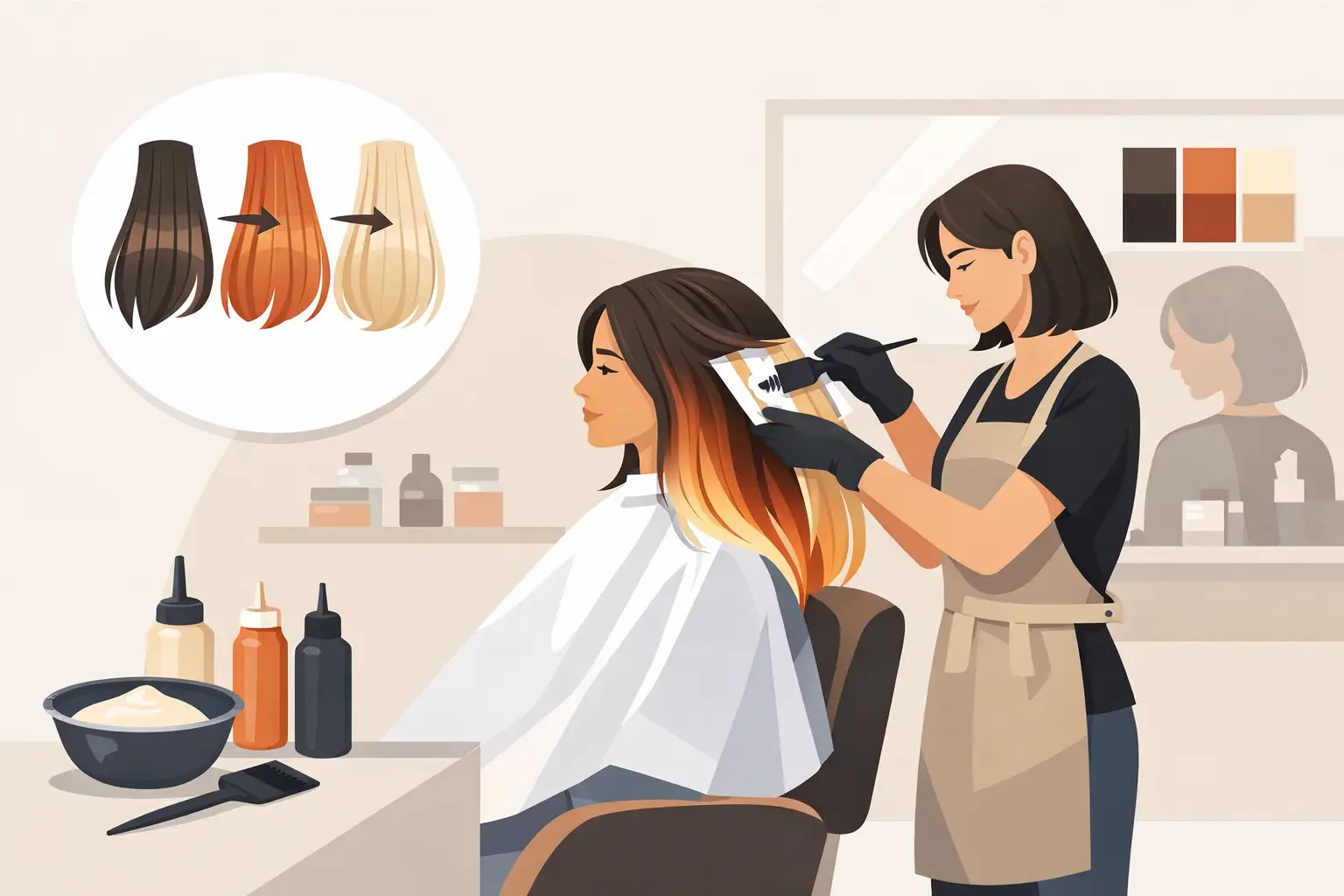
A color correction appointment is not a standard salon color service with a faster processing time and a predictable formula. It is a highly considered process for hair that has become too dark, too warm, uneven, banded, over-lightened, or simply far from the shade you had in mind. Knowing what to expect during color correction helps you arrive prepared, protect the condition of your hair, and understand why an expert-led plan is the key to a beautiful result.
At a luxury salon, the goal is never to chase a dramatic before-and-after at the expense of shine, strength, or longevity. The right correction brings your color back into balance while keeping the hair looking polished, touchable, and genuinely healthy.
What to Expect During Color Correction Consultation
Your appointment should begin with a detailed consultation, not an immediate trip to the color bowl. Your colorist will look closely at your current shade in natural and salon lighting, assess the condition and elasticity of your hair, and ask about its complete color history.
That history matters more than many guests realize. Box dye, black or red pigment, previous bleach, highlights, toners, glosses, keratin treatments, and even mineral buildup from water can all influence how hair responds. Be candid about every service or product you can remember, including color appointments performed elsewhere. This is not about judgment. It is how your specialist chooses the safest and most accurate route forward.
You will also discuss the result you want. Reference photos are helpful, especially when they show the depth, warmth, and dimension you are drawn to. Still, an experienced colorist will interpret those images through the reality of your current hair, natural base, texture, and maintenance preferences. A cool beige blonde, soft brunette blend, or luminous copper may be possible, but the timeline will depend on where your hair is starting.
At Rodeo Drive Beauty, this consultation-led approach allows the service to be tailored rather than treated as a one-formula fix. It also gives you a clear expectation of timing, investment, at-home care, and whether your ideal shade can be achieved in one visit or should be created over a series of appointments.
Why a Strand Test May Be Recommended
For complex corrections, particularly on hair that has been bleached repeatedly, colored very dark, or treated with unknown products, a strand test can be one of the most valuable steps. A small section of hair is tested with the proposed process to reveal how it will lift, what underlying warmth appears, and whether the hair can tolerate further lightening.
A strand test may feel like an extra step, but it is a mark of meticulous care. It prevents guesswork and helps your colorist make decisions based on your actual hair rather than assumptions. If the test reveals fragility or uneven lifting, your plan may shift toward a gentler correction, restorative treatments, or a phased approach.
This is where premium service often looks less dramatic than social media promises. Protecting the integrity of the hair may mean accepting a sophisticated in-between shade before reaching the final destination. A glossy, dimensional blonde that remains healthy is far more luxurious than a rushed pale result with breakage around the hairline.
The Color Correction Process, Step by Step
The service itself varies because color problems vary. Removing artificial dark pigment is different from softening harsh blonde bands. Neutralizing unwanted orange tones requires a different technique from correcting a green cast after swimming or an overly ashy finish that has become flat.
Your colorist may begin by removing or fading unwanted artificial color. Depending on your hair and its history, this might involve a color remover, a carefully controlled lightening service, or targeted placement rather than all-over processing. The hair is monitored throughout, because lift is not always uniform. Previous color can leave behind warm red, orange, or gold undertones that need to be addressed strategically, not simply covered with another dark formula.
For uneven blonde or visible bands, the focus may be on blending. Fine highlights, lowlights, root melting, balayage placement, and toning can soften obvious lines while restoring a more expensive-looking transition from root to ends. In some cases, adding depth is the fastest way to make hair look refined again. More blonde is not always the answer.
Toning and glossing are often essential parts of the appointment. They refine the exposed underlying pigment, enhance shine, and bring the entire color into harmony. A gloss can make the difference between hair that looks corrected and hair that looks intentionally, beautifully colored.
Processing times can be substantial. Expect a correction to take several hours, particularly if multiple techniques are required. Luxury hospitality matters here: settle in, wear comfortable clothing, and allow enough room in your day rather than scheduling a rushed commitment immediately afterward.
Your Hair May Need More Than One Appointment
One of the most honest answers to what to expect during color correction is that the first visit may be the beginning, not the finish line. This is especially common when transitioning from very dark color to a lighter brunette or blonde, removing vivid pigments, or repairing uneven lightening on delicate hair.
A responsible colorist will not promise platinum blonde in one session if your hair is currently black, heavily colored, or compromised. The trade-off is straightforward: aggressive processing may create a faster visual change, but it can also compromise softness, strength, and the ability to hold a beautiful tone afterward. A gradual plan preserves options.
Between appointments, your hair may be placed in a rich, wearable shade that complements your complexion and looks complete on its own. This gives your hair time to recover while allowing future services to lift or refine more predictably. For many guests, the process becomes an opportunity to discover a new, more flattering version of their color along the way.
Treatments Are Part of the Result, Not an Afterthought
Color correction can place additional demand on the hair, especially when lightening or pigment removal is involved. Your specialist may recommend a professional bond-building or moisture-focused treatment during the service to support strength, softness, and shine.
The ideal treatment depends on what your hair needs. Hair that feels stretchy when wet may require strengthening support, while dry, coarse ends may benefit from deep hydration and lipid replenishment. These are different concerns, and a personalized recommendation is more valuable than selecting a treatment based on a trend.
At home, plan to use salon-quality products chosen for your new color and condition. A color-safe shampoo, nourishing conditioner, heat protectant, and occasional targeted mask can extend the polished finish of your appointment. If your colorist recommends a toning shampoo, use it exactly as directed. Overuse can leave porous blonde hair looking dull, smoky, or uneven.
How to Prepare Before Your Appointment
Arrive with clean, dry hair unless your salon has instructed otherwise. Avoid applying heavy oils, root touch-up sprays, colored dry shampoo, or styling products immediately before your visit, as these can obscure the true condition and tone of the hair.
Bring inspiration images, but choose a range rather than one heavily filtered photo. Mention whether you want low-maintenance regrowth, frequent salon polish, more brightness around the face, or a softer overall result. These preferences shape the technique as much as the target color itself.
Most importantly, give your colorist the full picture. If you have used at-home dye, had a recent chemical service, take medication that affects your hair, or are concerned about breakage, say so before the process begins. Clear communication creates better choices and a more confident experience.
Aftercare That Keeps the Result Looking Refined
Your fresh color will continue to settle after the appointment. Wait the amount of time your colorist recommends before shampooing, use lukewarm rather than very hot water, and protect your hair from frequent high-heat styling. Heat protection is particularly important after a correction, when the goal is to preserve both tone and condition.
Sun exposure, chlorine, mineral-heavy water, and frequent washing can shift color more quickly than expected. Blondes may turn brassy, brunettes may fade warm, and vivid tones may lose intensity. A maintenance gloss, toner, or strategically timed refresh appointment can keep your color luminous without repeating the entire correction process.
The most satisfying corrections are built on patience, expert assessment, and a commitment to hair health. Give the process the time it deserves, and your color can move from frustrating to flawlessly intentional – with a finish that feels as elevated as it looks.