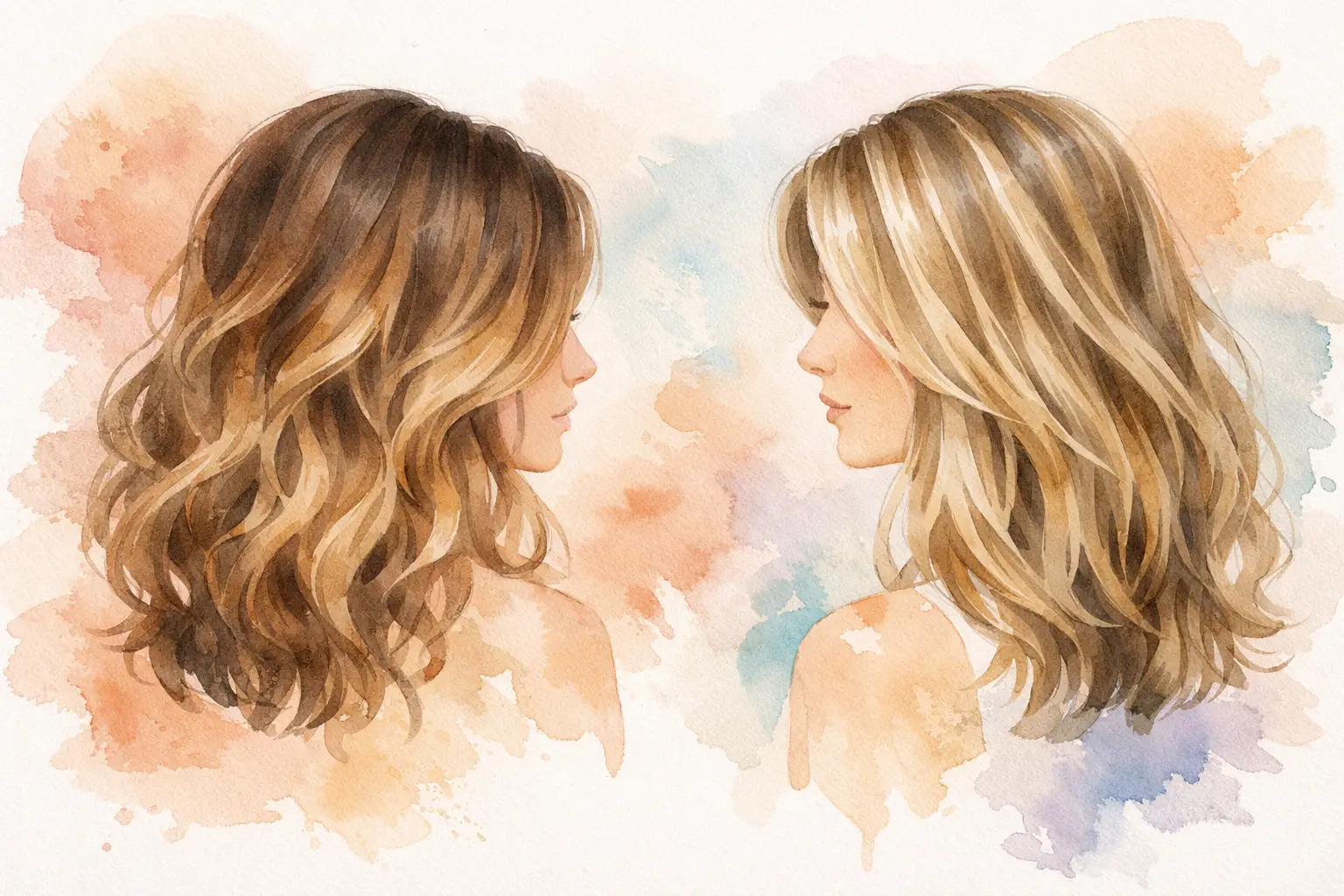
If you have ever sat in a salon chair scrolling through inspiration photos and wondering why two blondes that look vaguely similar come with very different maintenance plans, you are asking the right question. The balayage vs highlights difference is not just a technical detail. It affects how natural your color looks, how often you need touch-ups, how bright you can go, and how polished the final result feels in everyday life.
For clients who want their hair to look expensive rather than simply lighter, the distinction matters. Both services can be beautiful. Both can be customized. But they create different finishes, and the right choice depends on your hair color, your goals, and how much upkeep you are genuinely willing to commit to.
Balayage vs highlights difference at a glance
The simplest way to understand the balayage vs highlights difference is this: balayage is a hand-painted lightening technique designed for softness and dimension, while traditional highlights use foils to create more uniform lift from selected sections of hair.
Balayage usually leaves a softer transition at the root and a brighter effect through the mid-lengths and ends. Highlights tend to begin closer to the scalp and can create a cleaner, more noticeable ribbon of lightness throughout the hair. One is not better than the other by default. One is simply more suitable depending on the finish you want.
If your reference photo shows a sun-kissed, blended, low-maintenance blonde, balayage is often the better match. If your goal is brighter, more structured lightness with lift starting near the root, highlights are often the stronger choice.
What balayage actually looks like
Balayage is known for its soft, painted finish. Color is applied by hand rather than woven tightly into foils from root to end in a uniform pattern. This gives the stylist more artistic control over placement, brightness, and movement.
The result is usually more diffused. You see brightness where the hair naturally catches the light, with fewer obvious lines of demarcation. That is why balayage grows out more gently. When done well, it looks intentional for longer.
Balayage is especially flattering for clients who want dimension without looking overly processed. It works beautifully on brunettes who want caramel ribbons, dark blondes who want a beachier finish, and clients who prefer an elegant, lived-in result rather than a freshly striped effect.
What traditional highlights actually look like
Highlights are more precise and often brighter overall. Hair is sectioned, woven, and wrapped in foils so the lightener can process with more control and intensity. Because the strands are isolated, the stylist can often achieve stronger lift than with open-air painting alone.
That makes highlights a smart option if you want to go significantly lighter, create a cooler blonde, or brighten the hair closer to the scalp. They are also ideal for clients who like a cleaner, more polished blonde rather than a soft shadowed root.
Traditional highlights can be very fine and natural-looking, or bold and high-contrast. The technique itself is not outdated. The outcome depends on how the highlights are placed, how many are added, and how the final toner refines the shade.
The biggest visual difference
The most visible difference is where the brightness starts and how blended it feels.
Balayage usually starts lower and melts into the base color with a softer gradient. Highlights often begin much closer to the root, so the hair appears lighter from top to bottom. If you part the hair or wear it straight, highlights may read as more even and luminous throughout. Balayage often shows its dimension best in movement, layers, and waves.
This is where consultation matters. Many clients ask for balayage when what they really want is a rooted highlight. Others ask for highlights when what they actually want is a soft balayage with face-framing brightness. The terminology matters less than the visual goal.
Maintenance and grow-out
If low maintenance is a priority, balayage usually wins. Because the root area is more diffused, regrowth is less obvious. Many balayage clients can go longer between major appointments, especially if their natural base blends well with the lightened sections.
Highlights generally require more regular upkeep because the brightness starts nearer to the scalp. As your natural color grows in, the contrast becomes visible sooner. For clients who love a consistently bright blonde, that maintenance can be worth it. For clients with busy schedules or a preference for effortless elegance, it may feel like too much.
That said, balayage is not maintenance-free. Toning, glossing, bond-repair treatments, and occasional refresh appointments still matter if you want the color to stay refined rather than brassy or dry.
Which service is better for blonde goals?
It depends on the kind of blonde you mean.
If you want a bright, crisp, all-over blonde effect, highlights are often the stronger route. Foils can deliver more lift, more consistency, and a cleaner blonding pattern. They are especially useful if your hair is darker and you want to move noticeably lighter.
If you want a softer blonde with dimension and a more relaxed grow-out, balayage is often the better fit. It gives that expensive, naturally lifted finish many clients bring in as inspiration.
For many premium color results, the answer is not strictly one or the other. A luxury salon may combine techniques to get the best outcome: foiled highlights for brightness, balayage for softness, root smudging for blend, and glossing for tone. The most refined blondes are often customized rather than boxed into one label.
Hair health, processing, and realism
One reason the balayage vs highlights difference matters is hair integrity. Not every head of hair should be pushed to the same level of blonde in one session.
Highlights in foils can create more lift, which is excellent when brightness is the goal, but it can also place greater demand on the hair if the starting color is dark or the hair is already compromised. Balayage can be gentler in appearance, but it still involves lightening, and poorly executed balayage can absolutely lead to dryness or uneven results.
The real question is not which technique is healthier in theory. It is which technique is right for your current hair condition, history, and expectations. If your hair has old color, fragile ends, or previous bleach damage, an expert stylist may recommend a more gradual plan. Flawless color always begins with realism.
Cost and appointment time
Clients are often surprised that balayage is not automatically cheaper just because it may require fewer visits. In many salons, balayage is a premium service because it is highly customized and technique-driven. Highlights can also be a premium service, especially for full-head foils, toning, and finishing work.
Appointment time varies with hair density, length, and complexity. A subtle partial highlight may be faster than a major balayage transformation. A corrective balayage may take longer than classic foils. This is another reason consultation matters more than menu wording.
When comparing cost, think beyond the first visit. A service that costs more upfront but grows out gracefully may be a better value for your lifestyle than a lower-ticket service that needs frequent refreshing.
Who should choose balayage?
Balayage suits clients who want a refined, blended look with softer regrowth. It is excellent for those who wear their hair textured, waved, or layered and want movement to stand out. It is also ideal if you prefer a luxury finish that feels effortless rather than overly done.
It can be especially beautiful for brunettes, dark blondes, and anyone who wants a dimensional result that still feels natural in daylight. If you like the idea of brightness without living in the salon every few weeks, balayage is often the more comfortable choice.
Who should choose highlights?
Highlights suit clients who want visible brightness, stronger lift, and a more polished blonde from root to ends. If you wear your hair straight often, like a cleaner pattern of lightness, or want to get very blonde, highlights are usually the better match.
They are also useful for blending gray, brightening finer hair, and creating a more evenly illuminated result. For clients who do not mind a regular color schedule, highlights can deliver a very luxe, high-impact finish.
The smartest choice is a customized one
In a premium salon setting, the best result rarely comes from choosing a buzzword and hoping for the best. It comes from matching technique to hair type, skin tone, maintenance preference, and personal style. A client who wants understated glamour for everyday life needs a different blonding plan than someone preparing for a wedding season, frequent events, or a dramatic image refresh.
That is why expert care matters. The right stylist is not simply applying bleach. They are designing placement, preserving hair quality, selecting the right undertone, and making sure your color still looks elegant weeks after the appointment.
At Rodeo Drive Beauty, that level of detail is what turns a color service into a polished, high-end result. And if you are still choosing between balayage and highlights, that is actually a good place to be. It means you are thinking beyond trend names and focusing on what will truly suit you.
The best blonde is not the one with the most dramatic before-and-after. It is the one that looks flawless on your hair, in your routine, and long after you leave the chair.