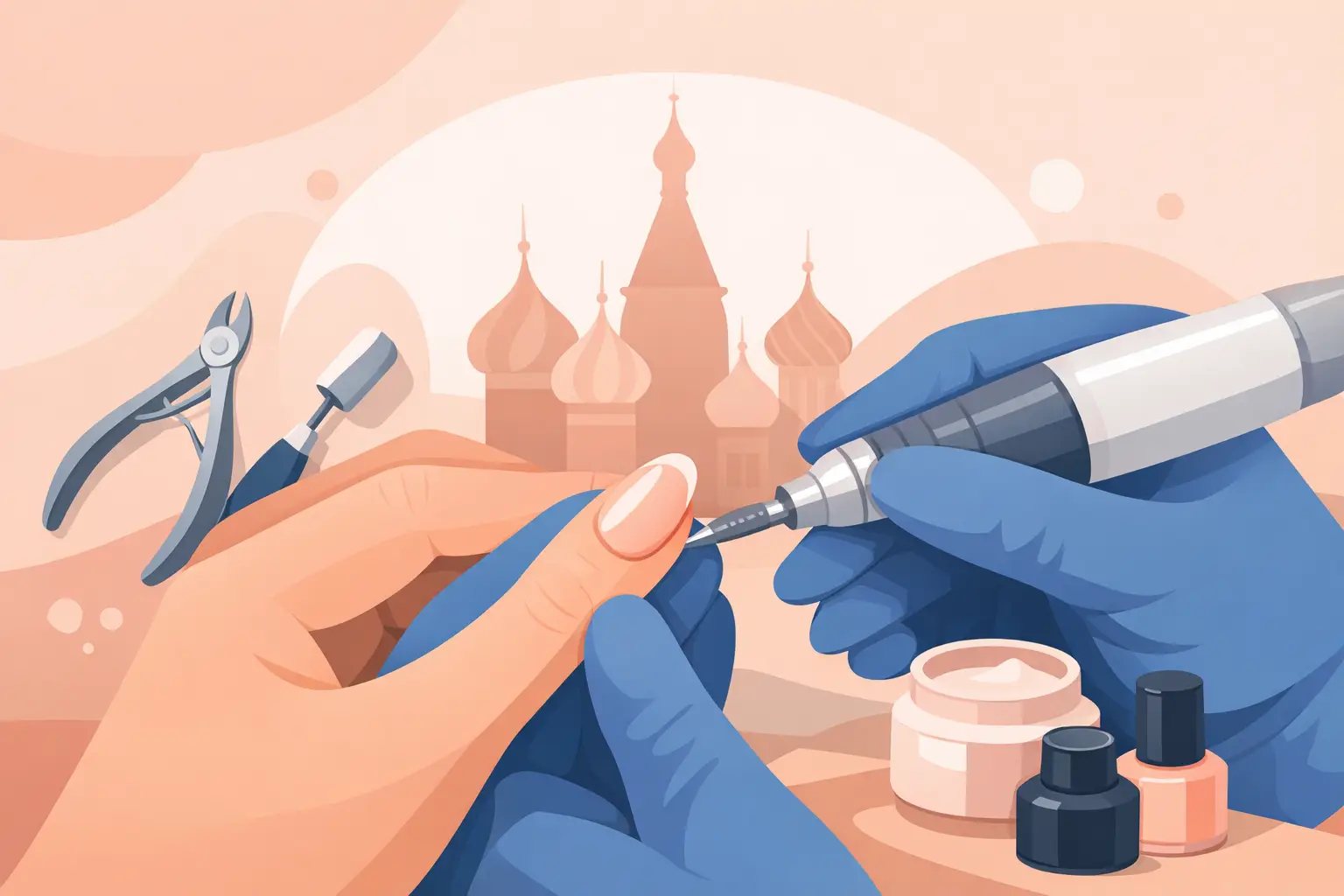
A beautifully finished manicure is often decided before the polish is applied. The difference lies in the preparation: how precisely the nail plate is refined, how carefully the cuticle area is detailed, and how cleanly color is placed near the base of the nail. So, what is Russian manicure technique? It is a meticulous, dry e-file manicure method designed to create an exceptionally polished cuticle line and a refined, long-lasting result.
Rather than relying primarily on soaking and traditional cuticle nippers, a trained nail specialist uses a professional electric file with fine, purpose-specific bits to lift, clean, and gently refine non-living skin around the nail. The technique is known for its crisp finish, but the real luxury is in the craftsmanship: every nail is assessed individually, with care taken to preserve comfort and nail health.
What Is the Russian Manicure Technique?
A Russian manicure, sometimes called a dry manicure or e-file manicure, focuses on detailed preparation of the nail and surrounding cuticle area. It is performed without soaking the hands in water, which allows the specialist to see the true condition of the skin and nail plate while working.
Using sterilized, professional-grade e-file bits, the nail artist carefully cleans the proximal nail fold, lifts adhered cuticle from the nail plate, and removes only the excess dead skin that would interfere with a flawless polish application. The nail is then shaped and prepared for gel polish, builder gel, or another selected service.
The finished look is remarkably neat. Because the nail plate is clean and the cuticle area is so precisely detailed, color can be applied very close to the cuticle without flooding the skin. This creates the elegant, almost freshly grown-out appearance that clients love, particularly with sheer nude shades, classic reds, French designs, and high-gloss dark colors.
Why the Technique Delivers Such a Polished Finish
The appeal of a Russian manicure is not simply that it looks clean on the day of the appointment. Proper preparation can also support better product adhesion. When excess cuticle and surface oils are carefully removed, gel color or structured overlays have a cleaner surface to bond to.
For clients who enjoy a consistently polished appearance, this can mean a manicure that continues to look refined as it grows out. It does not mean every manicure will last exactly the same amount of time. Natural nail growth, lifestyle, product choice, and at-home habits all play a role. Still, detailed prep gives a premium nail service its strongest possible foundation.
There is also an aesthetic advantage for hands that tend to look dry around the cuticles. The technique can create a smoother outline around each nail, making even a minimal, neutral manicure feel intentional and elevated. It is precision beauty rather than excess: immaculate details, balanced shape, and color placed with control.
Dry Preparation Matters
Water causes the nail plate to absorb moisture temporarily. When nails are soaked before a gel service, they can expand slightly and then contract as they dry. A dry manicure avoids this variable, allowing the specialist to prepare the nail in its natural state.
That is one reason Russian manicure techniques are especially valued for gel polish and builder gel services. The goal is not merely speed or a sharper visual effect. It is a controlled preparation process that supports a refined application and a more reliable wear experience.
What Happens During a Russian Manicure Appointment?
The appointment should begin with an assessment of your natural nails, cuticles, and the condition of any existing product. A skilled technician will consider your nail length, desired shape, skin sensitivity, and whether your nails need support from a structured gel overlay or simply a polished gel color.
After any existing gel is removed safely, the nails are shaped and the surface is prepared. The specialist then uses a low-speed professional e-file and a sequence of appropriate bits around the cuticle area. Each bit has a specific purpose, from gently lifting adhered cuticle to refining dry skin and smoothing the final contour.
This stage requires patience. A high-quality Russian manicure should never feel rushed, aggressive, or painful. You may notice a light vibration from the e-file, but you should not feel burning, pinching, or sharp discomfort. If you do, say so immediately. Expert care includes adjusting the technique to your comfort level.
Once preparation is complete, the nails are cleansed and the chosen product is applied. Many clients pair the service with a structured gel base or builder gel for a smooth, even silhouette, followed by color and a glossy top coat. Cuticle oil and a finishing hand treatment complete the experience.
Is a Russian Manicure Safe?
A Russian manicure can be safe when it is performed by a properly trained, detail-oriented professional using correct technique, sanitized tools, and a conservative approach to skin removal. The method itself is not inherently harmful. The risk comes from overfiling, excessive pressure, poor sanitation, or cutting living tissue.
The cuticle is a protective seal. It helps keep bacteria and irritants from entering the area where the nail grows. For that reason, a responsible nail artist does not attempt to remove every trace of skin around the nail. The aim is to remove loose, non-living tissue and refine the appearance while respecting the natural barrier.
Hygiene is non-negotiable. Metal implements and e-file bits should be cleaned, disinfected, and sterilized according to professional standards between clients. Disposable files and buffers should never be reused. At a luxury salon, these standards should be part of the service, not an upgrade.
Avoid a Russian manicure if you have cuts, inflammation, an active infection, unexplained redness, or a suspected fungal condition around the nails. Clients with very thin, compromised nails or recurring skin conditions should also mention this before the service. In some cases, a gentler manicure approach is the more appropriate choice.
Russian Manicure vs. a Traditional Manicure
The main difference is the preparation method. A traditional manicure often includes soaking, hand filing, and cuticle work with a pusher and nippers. It can be a beautiful, relaxing service and may be ideal for clients who prefer a simpler treatment or have sensitive cuticles.
A Russian manicure uses dry, highly detailed e-file work to create a more precise finish. It generally takes longer because the technician works nail by nail, often with several bit types. That additional time and training are reflected in the service experience and price.
Neither option is automatically better for every person. If you want an impeccably clean cuticle line, wear gel regularly, and appreciate technical detail, Russian manicure preparation may be an excellent fit. If you prefer a classic, lower-maintenance service or your skin is particularly reactive, a traditional manicure may be the wiser choice.
How to Care for Your Nails Afterward
The best Russian manicure still needs thoughtful at-home care. Apply cuticle oil daily, especially after handwashing, to keep the skin supple and maintain that fresh, conditioned appearance. Wear gloves for cleaning, gardening, and prolonged contact with water or household chemicals.
Do not use your nails as tools to open cans, scratch labels, or pry objects apart. Gel can be durable, but it is not indestructible. Picking or peeling at lifting product can remove layers from the natural nail and make the next appointment more challenging.
Most clients return for maintenance in about two to four weeks, depending on nail growth and the product used. Waiting too long can place extra pressure on longer enhancements or structured gel, particularly if your nails are active in daily work, travel, or fitness routines.
A Russian manicure is at its best when it feels like care, not correction. Choose a specialist who values hygiene, restraint, and meticulous technique, then let the details do what they do best: make every gesture look a little more polished.