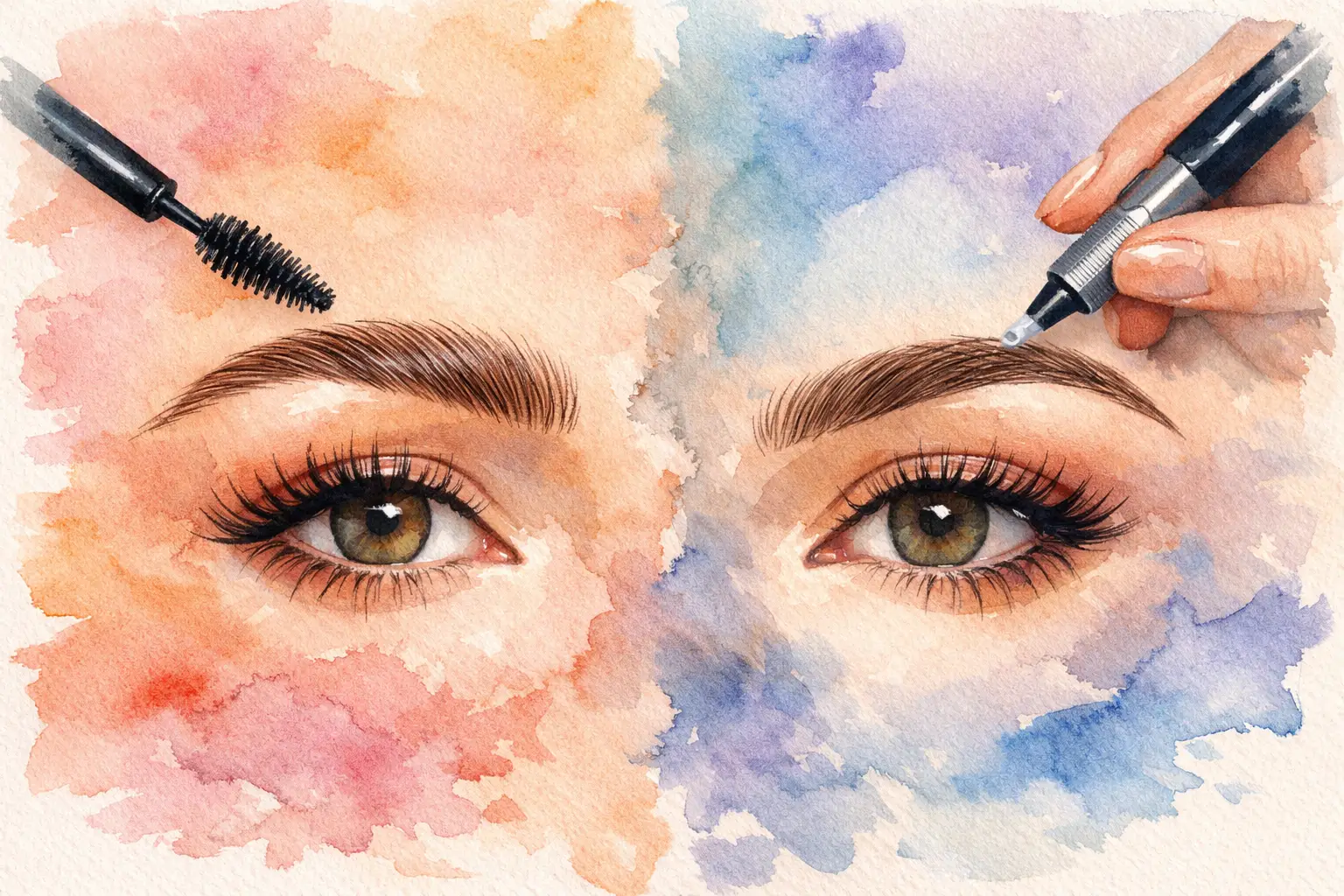
A polished brow changes more than your face. It changes how quickly you get ready, how balanced your features look in photos, and how put-together you feel before the rest of your makeup is even on. When clients ask about brow lamination vs microblading, they are usually asking a bigger question: do I want a styling treatment, or do I want a semi-permanent shape enhancement?
That distinction matters, because these services solve very different brow concerns. One works with your natural brow hairs to create a fuller, lifted effect. The other uses pigment to mimic hair strokes and visually rebuild sparse areas. Both can be beautiful. The right choice depends on your brow pattern, your skin, your maintenance habits, and the finish you want every day.
Brow lamination vs microblading: the core difference
Brow lamination is a brow styling treatment. It softens and resets the direction of your natural brow hairs so they can be brushed into a fuller, more lifted shape. Think of it as structure, polish, and visual volume created from the hair you already have.
Microblading is a semi-permanent cosmetic tattoo technique. A specialist places pigment into the skin in fine, hair-like strokes to create the look of fuller brows where hair is missing, uneven, or very sparse. Think of it as shape building and density creation, even when natural brow growth is limited.
If your brows are naturally decent but unruly, flat, or patchy in a mild way, lamination often delivers the refinement you want. If your brows have significant gaps, over-tweezed areas, or an underdefined shape that makeup cannot consistently fix, microblading may offer more transformation.
What brow lamination actually looks like
A well-executed lamination does not have to look stiff or overly brushed upward. At a premium salon, the goal is a controlled, tailored finish that suits your bone structure and personal style. Brows can be feathered, softly lifted, or more sleek and directional depending on your preference.
The result is immediate. Brows appear fuller, more symmetrical, and easier to style. Tint is often paired with lamination for added depth, which can make lighter or finer brows look more pronounced without the commitment of pigment in the skin.
Lamination is especially flattering for clients who already have brow hair but struggle with uneven growth patterns, downward-turning tails, or a lack of definition through the arch. It gives a groomed, editorial finish while still keeping the look rooted in your natural brow.
Who usually loves lamination
Clients who prefer flexibility tend to love lamination. If you enjoy adjusting your brow shape slightly with gel, changing your makeup look from soft to bold, or keeping your treatment schedule easy and low-pressure, lamination fits that lifestyle well.
It is also a strong choice for those who are brow-curious but not ready for a semi-permanent service. You get visible improvement without the longer commitment or healing process associated with pigment work.
What microblading actually looks like
Microblading is more corrective by nature. It is designed to create the illusion of real brow hair in sparse or missing areas, helping establish shape, fullness, and definition that remain in place beyond your daily routine.
When performed with precision, microblading can look soft and sophisticated rather than harsh. The best results are not blocky or overly saturated. They are balanced, believable, and customized to your facial proportions, undertone, and existing hair pattern.
This is often the better option for clients who spend time filling in their brows every morning and still feel they never look even. It can be particularly valuable if your natural brows have been thinned by over-tweezing, hormonal changes, or naturally sparse growth.
Who usually prefers microblading
Microblading appeals to clients who want more built-in definition. If your goal is to wake up with a clear shape already there, or to reduce reliance on pencils and powders, it can be a worthwhile investment.
That said, it asks more of you upfront. There is a healing period, a touch-up is typically needed, and long-term results depend on both technique and aftercare. It is not the treatment to choose casually.
Longevity, upkeep, and daily convenience
This is where brow lamination vs microblading becomes very practical.
Lamination typically lasts around four to eight weeks, depending on your hair texture, aftercare, and how quickly your brows return to their natural growth pattern. It is a shorter-term commitment, but the appointments are simple and the refresh cycle is easy to manage.
Microblading lasts much longer, often around 12 to 18 months before a color boost is needed, though this varies with skin type, sun exposure, skincare habits, and pigment retention. Oily skin may fade pigment faster, while active exfoliation and certain facial treatments can also shorten longevity.
In daily life, laminated brows still need a little styling. Most clients brush them into place and may use a light brow gel for hold. Microbladed brows need much less day-to-day effort once healed, though some people still add a touch of makeup for extra depth.
So the question is not only how long it lasts. It is how you want maintenance to feel. Some clients prefer quick, regular grooming appointments. Others prefer fewer appointments and a more permanent-looking baseline.
Skin type, brow type, and suitability
Suitability is where expert consultation becomes essential.
Lamination depends on having enough natural brow hair to reshape. If your brows are extremely sparse, lamination can only do so much because it cannot create new hair where none exists. It enhances what is already there.
Microblading depends heavily on skin quality. Very oily, highly sensitive, or mature skin may not hold crisp strokes as cleanly as ideal candidates do. That does not always rule the service out, but it may affect how soft or defined the final healed result appears.
Certain medical factors, skin conditions, and treatments can also influence whether one service is appropriate. If you are pregnant, breastfeeding, using strong resurfacing products, prone to keloids, or managing active skin irritation around the brow area, your provider may advise waiting or choosing the less invasive option.
This is why a luxury service experience matters. The best brow results come from a specialist who evaluates your skin, hair density, symmetry, and lifestyle before recommending a treatment, rather than pushing the most dramatic option.
Cost and value over time
Lamination usually costs less upfront. It is accessible, effective, and ideal for clients who like polished brows without committing to a more advanced service. Over time, however, regular appointments add up.
Microblading is a higher initial investment because it is more technical and longer-lasting. Many clients find the value lies in the time saved and the consistency of having a defined shape every day. Others prefer the lower commitment and lower upfront cost of lamination, even if they maintain it more frequently.
Value is personal. If you enjoy fresh salon maintenance and want the freedom to adjust your brow style with trends, lamination makes sense. If you care most about convenience and built-in structure, microblading may feel more worth it.
Which result looks more natural?
Both can look natural when performed beautifully. Both can also look artificial when done poorly.
Lamination tends to look more natural on clients with a healthy amount of existing brow hair, because the final effect is literally your own brow being shaped at its best. Microblading can also look extremely natural, especially when the artist uses restraint and designs the brow with softness in mind.
The more relevant question is what kind of natural you want. Lamination gives a groomed-natural finish. Microblading gives a filled-in-natural finish. One highlights hair texture. The other recreates it visually.
How to choose between brow lamination and microblading
If your brows are uneven but present, and you want a refined, lifted, fashion-forward finish, lamination is often the better place to start. It offers flexibility, less commitment, and immediate polish.
If your brows are sparse enough that styling alone cannot create the shape you want, microblading may be the more effective answer. It is the stronger option for rebuilding definition and reducing your dependence on makeup.
For some clients, the decision is also emotional. Lamination feels light, elegant, and easy. Microblading feels more transformational. Neither is inherently better. The right treatment is the one that aligns with your features, your expectations, and how you want to move through your routine.
At a salon such as Rodeo Drive Beauty, that choice should feel considered, not rushed. A refined brow service is never just about trend. It is about proportion, technique, and results that still feel like you – only more polished.
The smartest first step is not asking which treatment is more popular. It is asking which one solves your actual brow problem with the least compromise.