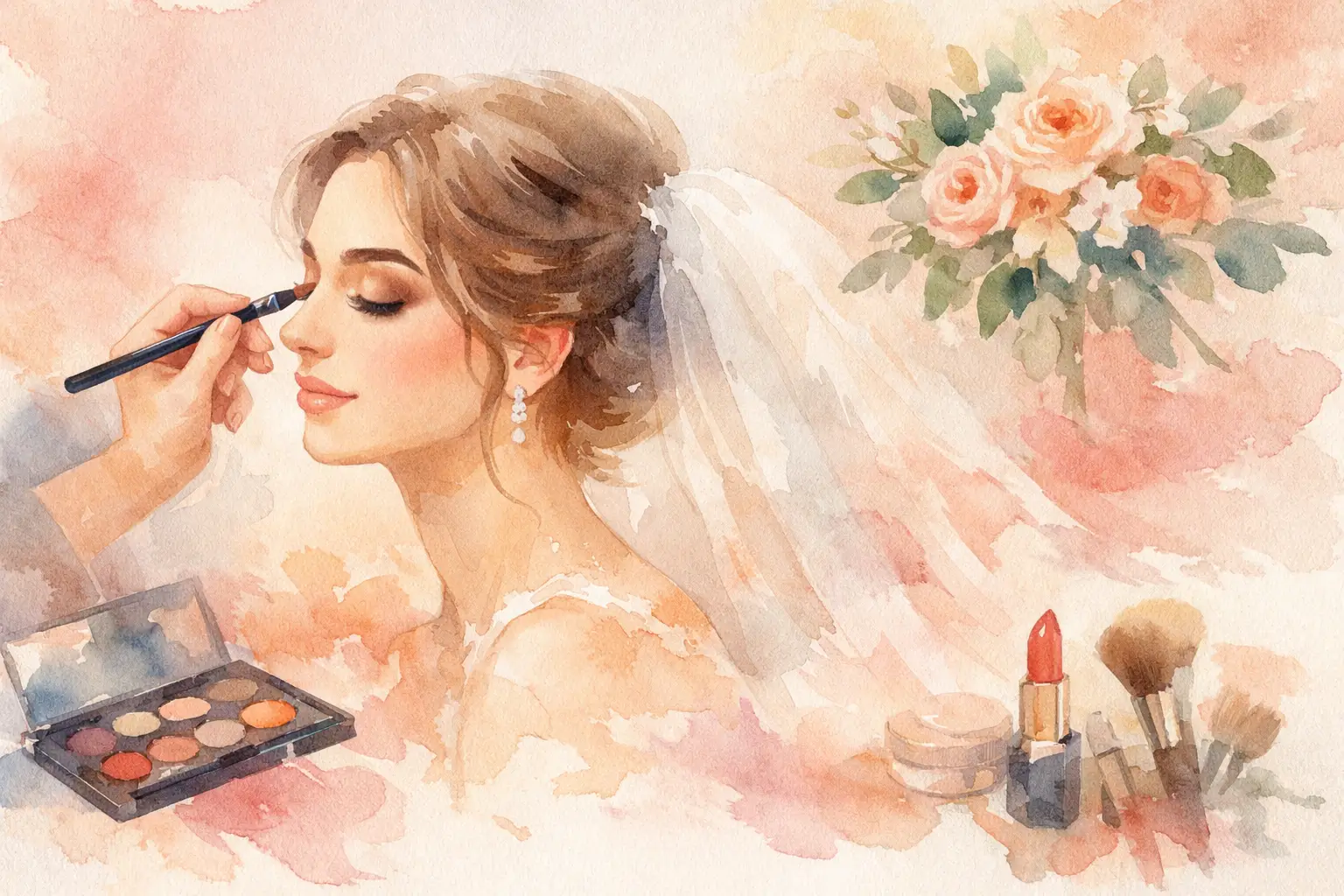
A bridal trial rarely goes wrong because of makeup alone. More often, the issue is timing, communication, or expectations that stayed too vague until the brush touched skin. The best bridal makeup trial tips are the ones that help you walk in prepared, ask better questions, and leave with a look that feels like the most polished version of you – not someone else entirely.
Your wedding makeup has to do more than look beautiful in a mirror. It needs to hold through photographs, hugs, heat, happy tears, and several hours of being seen up close. A proper trial is where that standard gets tested.
Why bridal makeup trial tips matter more than inspiration photos
A saved photo can show tone, finish, and mood, but it cannot show how a foundation sits on your skin after six hours or whether a soft glam eye still feels balanced once your hair, dress, and jewelry are in place. That is why a trial is not a box to check. It is a fitting.
Luxury bridal beauty is always personal. The right artist will consider your skin type, wedding time, venue, lighting, dress neckline, and even how naturally expressive your face is. A bride who rarely wears makeup may want refinement with invisible structure. Another may want a more sculpted, camera-ready finish. Neither approach is better. It depends on the setting and on what makes you feel confident.
Before the appointment, bring direction – not a fantasy board
The most useful reference photos share a common thread. They show similar skin tone, eye shape, and makeup intensity. If one photo is dewy minimalist beauty and the next is full red-carpet contour, your artist is left interpreting a mood rather than building a precise plan.
Bring two or three images that genuinely reflect what you want. Then be ready to explain what you like in each one. Maybe it is the skin finish in one, the lash shape in another, and the lip tone in a third. That level of clarity saves time and usually leads to a more refined result.
It also helps to arrive knowing your dress details and hairstyle direction. Makeup does not live on its own. A sleek bun with architectural earrings can support a stronger eye or a cleaner, more sculpted complexion. Loose romantic waves may call for softer transitions and less graphic definition.
Show up with your skin in its real condition
One of the most practical bridal makeup trial tips is also one of the most overlooked: do not treat the trial like a red-carpet prep day unless that reflects your normal routine. If you show up after an aggressive facial, harsh exfoliation, or a brand-new active product, your skin may react in ways that have nothing to do with the makeup itself.
Come in with clean skin and a routine your face already tolerates well. If your wedding-day skincare will include specific treatments, discuss that timing with your artist in advance. Some brides benefit from hydrating facials and barrier-supporting products in the weeks before the wedding. Others need a more oil-balancing approach. The goal is predictability.
If you are prone to sensitivity, dryness, or breakouts, say so early. Good artistry is not just about color matching. It is also about product choice, layering, and texture management.
Wear white or a tone close to your dress
This small choice changes more than most brides expect. Makeup intensity can look perfect with a black top and suddenly feel too heavy once surrounded by white, ivory, or champagne fabric. Light clothing reflects back onto the face and can make complexion makeup, blush, and lip color read differently.
You do not need to arrive in full bridal styling, but wearing a top near your dress color gives a more honest preview. If you already have your veil or hair accessory, a quick photo with them in place can also help you judge proportion.
Ask to test longevity, not just appearance
A flawless finish at noon means very little if it separates by dinner. During the trial, ask how the artist builds wear time into the look. Primer choice, skin prep, cream-versus-powder balance, setting technique, and product layering all affect longevity.
This is especially important for warm climates, outdoor ceremonies, and long event timelines. In places like Limassol, where heat and light can be significant factors for bridal events, makeup needs to perform beautifully under real conditions, not just controlled indoor lighting.
If possible, schedule your trial early enough in the day to wear the makeup for several hours afterward. Go to lunch. Step outside. Take photos in daylight and indoor lighting. This is where issues reveal themselves – too much shine, under-eye creasing, lash discomfort, or a lip color that fades unevenly.
Bridal makeup trial tips for photos: check your look on camera
Phone cameras are not perfect, but they are useful. Take photos facing natural light, standing in shade, and indoors under warmer lighting. Then review them later instead of judging everything in the moment.
Pay attention to whether your skin looks flat, too reflective, or too matte. Notice if the brows appear stronger in photos than they do in person. Watch for flashback if your complexion products contain ingredients that can create a pale cast under flash photography.
This is also when bridal makeup can reveal a common trade-off. The makeup that looks slightly more defined in person often photographs best. That does not mean heavy. It means deliberate. Features can soften on camera, so a touch more structure in the eyes, cheeks, or lips may create the most balanced final result.
Speak up about comfort and recognition
The best trial is not the one where you stay polite and leave uncertain. It is the one where you say, kindly and clearly, what feels off. Maybe the lip tone is too beige. Maybe the lashes are beautiful but feel too dramatic for how you normally see yourself. Maybe the skin is radiant, but not quite polished enough for formal photography.
A bride should still look like herself. That phrase gets used often, but it means different things to different people. For some, it means very natural skin and soft eyes. For others, it means signature eyeliner, fuller lashes, and a defined lip because that is how they feel most confident at important events. Recognition matters as much as beauty.
A skilled artist will welcome feedback because refinement is part of the process. Precision usually comes from adjustment, not guesswork.
Plan the full beauty picture, not makeup in isolation
Your trial should account for hair, brows, lashes, and skin tone on the wedding date. If you plan to tan, brighten your hair, shape your brows, or add lash extensions shortly before the event, mention it. These details change facial balance and can affect makeup color choices.
This is where a full-service beauty destination can make a meaningful difference. When your hair, brow design, lash services, skincare, and makeup are approached as one polished look, the result feels more cohesive and elevated. At Rodeo Drive Beauty, that kind of coordination is part of what makes bridal preparation feel less rushed and far more refined.
Time your trial wisely
Too early, and your vision may still be vague. Too late, and adjustments become stressful. A comfortable window is usually one to three months before the wedding, once your dress, hair direction, and overall styling are mostly settled.
If you have more than one bridal event, such as a civil ceremony, rehearsal dinner, or next-day brunch, mention that too. Sometimes the trial helps define not just the wedding look, but a full beauty wardrobe across the celebration.
It is also smart to ask how much time will be scheduled on the wedding day and whether touch-up products will be recommended. Even long-wear makeup benefits from a lipstick refresh and light powdering at the right moment.
Know what to decide before you leave
Do not finish the trial with only a general sense of whether you liked it. Confirm the actual details. Which foundation was used? What lip family felt best? Will you wear individual lashes or a strip? Are there any skin prep changes to make before the wedding? If something needs refinement, note it while it is fresh.
Photos help, but written notes help more. Tiny adjustments are easy to forget, especially when wedding planning pulls your attention in ten directions at once.
The best bridal makeup trial tips are really about clarity
A successful trial should leave you feeling relieved. You should know what your face will look like, how the makeup will wear, and what refinements have been agreed on. That confidence changes the energy of the wedding morning. Instead of second-guessing details, you get to settle into expert care and enjoy being prepared.
The most beautiful bridal makeup is never just pretty. It is considered, flattering, and dependable. When your trial is approached with that standard, the final look feels effortless for all the right reasons.
Leave a Reply