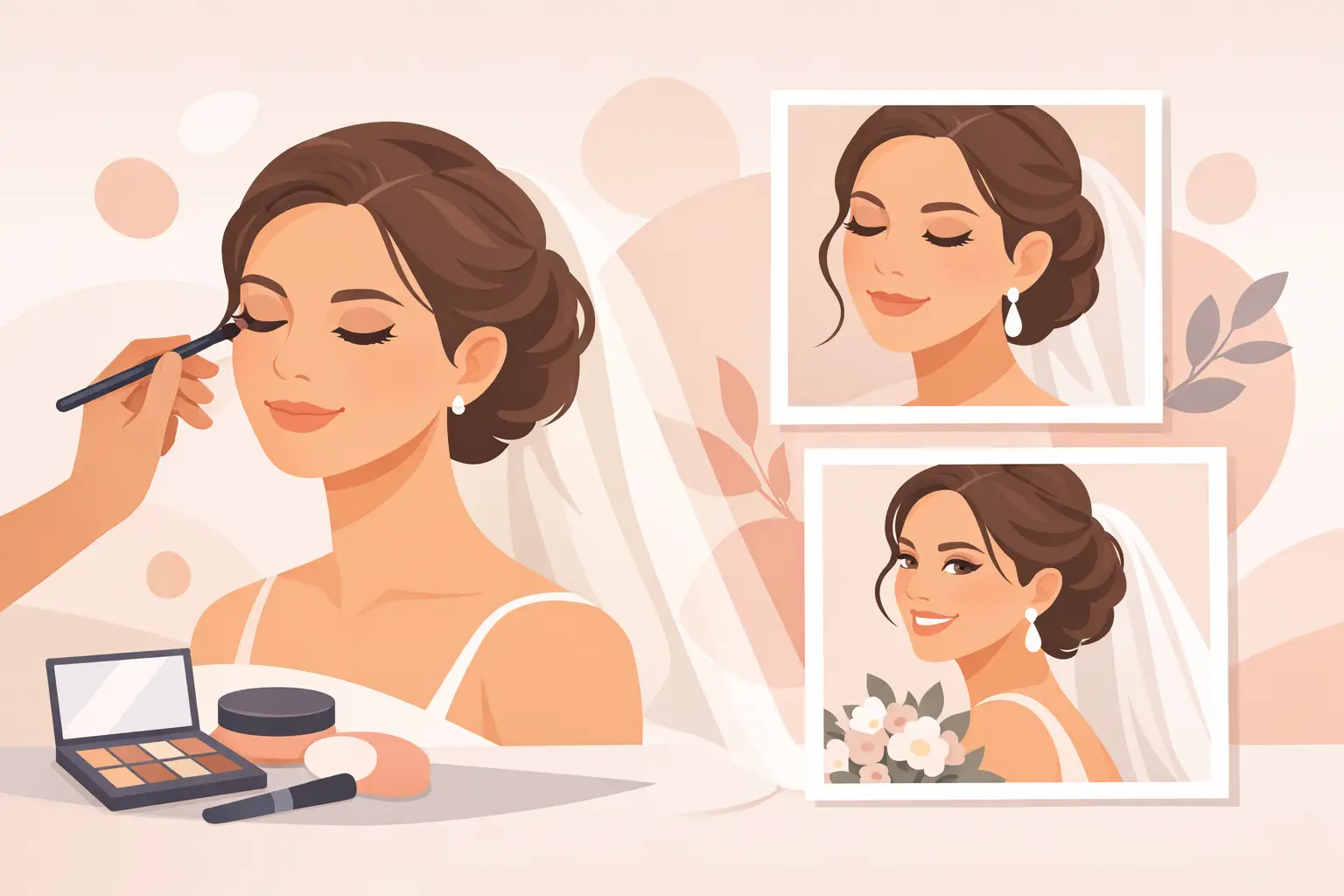
A bridal trial is where a beautiful makeup idea becomes a reliable wedding-day plan. The most useful bridal makeup trial examples do more than show a finished face: they reveal how your complexion, eye shape, hairstyle, dress, lighting, and personal style work together. The goal is not to look like someone else on your wedding day. It is to look unmistakably like yourself, impeccably polished and confident from the first photograph to the final dance.
What a Bridal Makeup Trial Should Reveal
A premium bridal makeup trial is a focused consultation, not simply an application. Your artist should assess your skin’s needs, ask how you normally wear makeup, and consider the setting and timing of your celebration. A ceremony on a sunlit Cyprus terrace calls for different complexion choices than an evening ballroom reception, even if both brides request “natural glam.”
The trial is also the right time to identify the details that often get missed in inspiration photos. You may love luminous skin but prefer a more defined eye. You may want a nude lip that remains visible in photography. Or you may discover that the lashes you imagined feel too dramatic once your hair is styled and your veil is in place. These are not problems. They are precisely why the trial matters.
Bring reference images, but bring them selectively. Two or three images that show the mood you love are more helpful than a gallery of unrelated looks. Include a photo of your dress, a note about your flowers, and images of your usual makeup when you feel your best. An experienced artist will translate the feeling of those references into a look suited to your features.
Bridal Makeup Trial Examples for Different Wedding Styles
The refined soft-glam bride
Soft glam remains a favorite because it has presence without feeling overdone. Think perfected, satin-finish skin; softly sculpted cheeks; neutral taupe or champagne eyes; individual or wispy lashes; and a rose, peach, or beige-pink lip. The makeup is carefully layered, but the result appears effortless.
At a trial, test the level of contour and highlight in both natural light and flash photography. A subtle contour can give the face dimension in photos, while a heavy hand may look more theatrical than refined in person. The same principle applies to shimmer. A fine, elegant sheen on the eyelid photographs beautifully; large glitter particles can create uneven texture under close-up flash.
This look is particularly effective for brides who want to feel polished yet recognizable. It pairs easily with flowing hair, a sleek low bun, or a structured Hollywood wave, though each hairstyle may change how much eye definition is needed.
The luminous, fresh-skin bride
For the bride who rarely wears full makeup, the fresh-skin approach creates a quietly luxurious result. The complexion is even and radiant rather than visibly matte, brows are softly groomed, and the eyes are enhanced with light definition around the lashes. Cream blush and a hydrated lip finish keep the face alive and modern.
The essential test here is longevity. “Glowy” should not become shiny through a warm ceremony, emotional hugs, or hours of dancing. During the trial, your makeup artist can choose where to retain luminosity – typically the high points of the cheeks – and where to use finely applied setting products for control. Skin preparation matters as much as foundation selection, especially if you are managing dryness, sensitivity, or an oily T-zone.
Ask to wear this trial look for several hours. Notice whether the foundation settles into fine lines, whether the concealer maintains coverage, and whether you still love the lip color after a meal. A natural look has little room for products that wear unevenly.
The classic bridal look with a defined eye
A classic bridal makeup look centers on balanced elegance: a clean complexion, a softly defined crease, liner tailored to the eye, lashes with lift, and lips that are polished rather than competing for attention. It is timeless because every feature receives thoughtful definition.
This is an excellent trial example for brides wearing a structured gown, traditional veil, or sophisticated jewelry. A thin liner may be enough for large, open eyes, while a softly lifted shadow shape can be more flattering for hooded lids. The goal is never to copy a wing shape from social media without adjustment. Makeup should enhance your eyes when they are open, relaxed, smiling, and captured from different angles.
For lips, consider a neutral rose, muted berry, or warm pink rather than a shade that disappears against your complexion. Take a few photos from a distance. What feels slightly stronger in the mirror often reads balanced in wedding images.
The statement lip bride
A red, berry, or rich rose lip can be extraordinary with a clean, understated eye. This combination brings confidence, character, and a memorable finish to a minimal satin gown or fashion-forward bridal suit. It also requires more planning than a nude lip.
At the trial, test the exact undertone against the whiteness or warmth of your dress and your bouquet. Blue-reds tend to feel crisp and classic, while warmer reds can complement golden skin tones and ivory fabrics. Ask how the color will be refreshed after kissing, eating, and champagne. A long-wearing formula helps, but no lipstick is entirely maintenance-free.
The trade-off is practical: a statement lip may leave a slight transfer mark and needs a precise touch-up. For many brides, that small commitment is worth the impact. For others, a deeper rose stain offers a similar sense of color with a more forgiving wear pattern.
The elevated bronze and champagne look
Bronze eyes, warm blush, glowing skin, and a caramel or peachy nude lip create a sun-kissed bridal look that feels especially fitting for destination celebrations and golden-hour portraits. It can be glamorous without becoming heavy when the tones are chosen carefully.
A bridal trial should confirm that the bronzer is shaping the face, not turning it orange, and that the eye colors have enough contrast to be visible. Champagne shadow can be beautiful, but its undertone matters. A pale icy shimmer may clash with a warm complexion, while antique gold or soft peach champagne can look harmonious and expensive.
This style works beautifully with warm-toned flowers and softly textured hair. If your gown is bright white and your accessories are silver, the artist may adjust the warmth to keep the overall finish cohesive.
What to Test Beyond the Mirror
Your trial makeup should be photographed in daylight, indoor light, and with flash if possible. Stand near a window, take a few candid-style photos, and look at them the next day rather than judging every detail immediately. You are assessing balance, not searching for perfection at close range.
Wear a light-colored top with a neckline that resembles your gown. This allows you to see how the foundation tone blends onto the neck and chest, where bronzer placement sits, and whether the makeup suits the overall bridal palette. If you plan on a spray tan, have it done before the trial or clearly discuss the expected shade. Your face, shoulders, and body should read as one polished look.
Comfort is equally important. Notice whether false lashes feel secure, whether your eyes water after liner, and whether a matte lip feels too dry. Mention any allergies, lash extensions, skincare prescriptions, or recent aesthetic treatments before your appointment. These details allow your artist to make choices that protect both your skin and the result.
How to Prepare for a Flawless Trial
Arrive with clean skin and your usual skincare routine completed, unless your makeup artist gives different instructions. Avoid testing a new active skincare product in the days before the appointment. Redness, peeling, or unexpected breakouts make it harder to evaluate makeup accurately.
Schedule your trial when you have an occasion afterward, or at least several hours of normal activity. A dinner, engagement shoot, dress fitting, or evening out gives you the chance to see how the makeup wears in real life. Keep notes on what you loved and what you would change: more blush, softer brows, a different lash style, or a lip shade with more warmth.
It is also wise to coordinate your makeup trial with a hair trial when possible. A look that feels perfect with your hair down may need a little more structure once your hair is swept into a bun. Seeing the full picture prevents last-minute changes and creates a more composed final result.
Questions Worth Asking Your Makeup Artist
Ask how the chosen complexion products will wear through heat, humidity, tears, and photography. Ask whether you will need a touch-up kit and what it should contain. You can also discuss timing: bridal makeup should be scheduled to leave enough room for dressing, photos, and a calm moment before the ceremony.
Most importantly, be honest about your comfort level. If the makeup feels too heavy, too pale, too bronzed, or simply unlike you, say so during the trial. Expert care means thoughtful adjustments, not insisting on one signature style.
At Rodeo Drive Beauty, bridal makeup is approached with that same exacting attention: premium products, considered skin preparation, and a finish designed to stay refined under every lens.
Your wedding makeup does not need to be trend-led to feel exceptional. Choose the version of bridal beauty that lets you greet every guest, step into every photograph, and look back at the day with complete confidence.