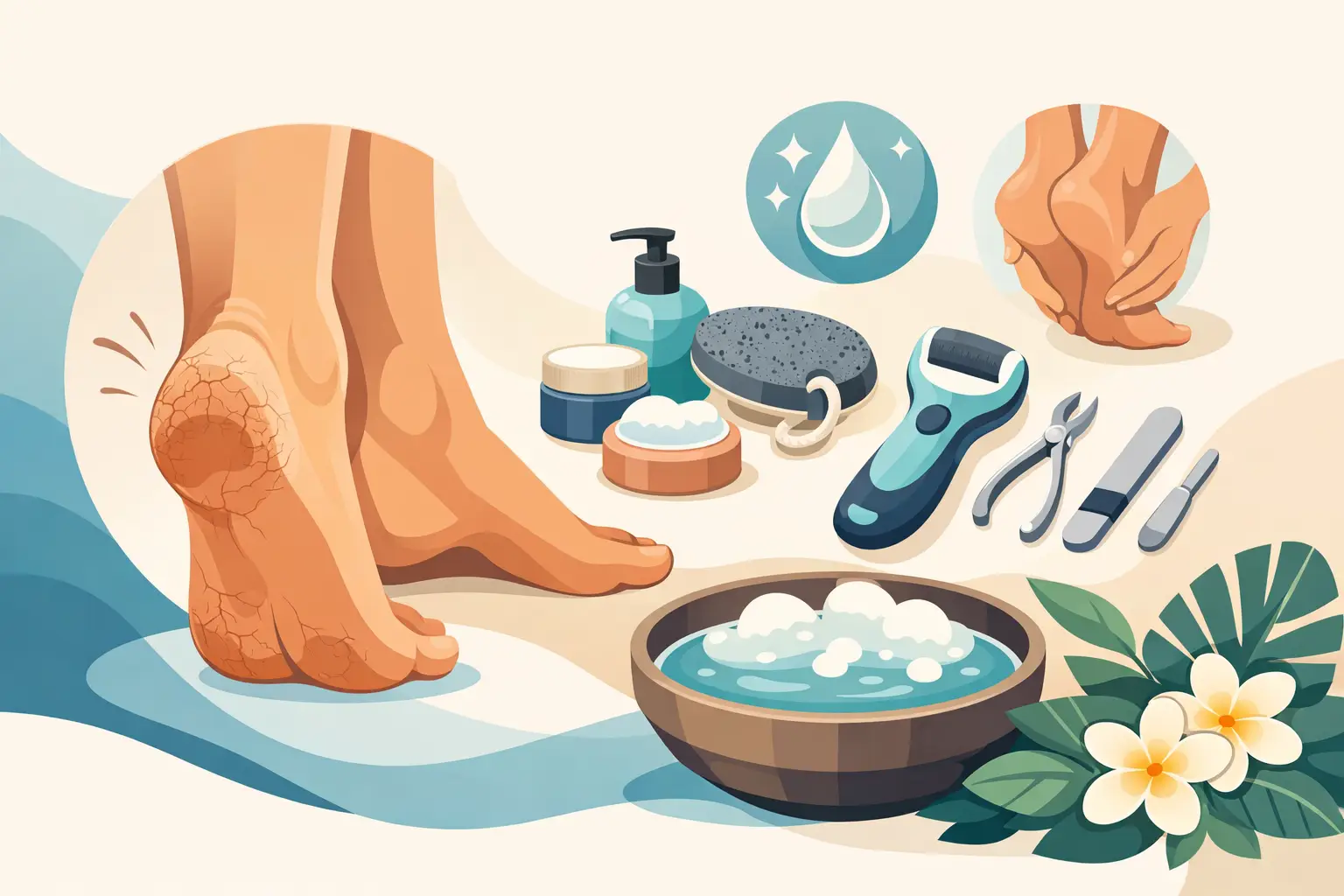
Dry, rough heels can undermine the feeling of an otherwise polished look – especially when open-toe shoes, pool days, or a special event are on the calendar. The best pedicure options for dry heels do more than make feet look temporarily smoother. They pair precise exfoliation with moisture-restoring care and a maintenance plan suited to the condition of your skin.
A luxury pedicure should never feel rushed or overly aggressive. Heels are built to withstand pressure, so the skin naturally thickens over time. The goal is not to remove every trace of callus in one appointment. It is to refine roughness carefully, restore comfort, and leave feet visibly softer without compromising the skin barrier.
Why Heels Become Dry and Rough
Heel dryness is rarely caused by one thing. Open-back footwear, long hours on your feet, hot showers, dry weather, and inconsistent moisturizing all contribute. Friction and pressure encourage the body to produce more hardened skin, while dehydration makes that skin look dull, feel rough, and sometimes crack around the edges.
A basic home soak and quick scrub may help for a day or two, but it often misses the balance dry heels require. Too little exfoliation leaves the surface uneven. Too much filing can trigger sensitivity or cause the skin to thicken again as a protective response. Expert care is valuable because it adapts the treatment to what your heels actually need that day.
Best Pedicure Options for Dry Heels
The right choice depends on whether your heels are mildly dehydrated, visibly callused, or beginning to feel uncomfortable. A thoughtful consultation should consider your skin condition, lifestyle, footwear, and any sensitivities before treatment begins.
The Classic Moisture-Focused Pedicure
For light dryness and occasional rough texture, a refined classic pedicure with an intensive moisture focus is often enough. This treatment typically begins with a warm foot soak to soften the skin, followed by careful shaping, cuticle grooming, and gentle heel exfoliation. A rich foot mask or concentrated cream is then worked into the feet and lower legs with relaxing massage.
This is an excellent choice for clients who maintain regular appointments and want their feet to feel fresh, smooth, and impeccably groomed. It is also ideal before a holiday, wedding, or event when you want beautiful results without needing a more intensive corrective service.
The trade-off is that a classic pedicure is designed for maintenance, not major buildup. If the heel surface is thick, uneven, or cracked, gentle exfoliation alone may not produce the refined finish you are looking for.
The Callus-Focused Pedicure
When dry heels have developed noticeable hardened skin, a callus-focused pedicure offers more targeted results. The specialist softens the feet, assesses the areas of buildup, and uses professional techniques to reduce excess dead skin with control. The emphasis should remain on precision, not force. Well-treated heels feel smoother and more comfortable, never sore or over-filed.
This option is especially effective for people who wear sandals frequently, stand for work, exercise regularly, or notice roughness returning quickly. It can create a significant visible difference in one appointment, particularly when followed by deep hydration and protective finishing products.
A callus treatment is not a substitute for medical care. If you have deep, bleeding cracks, swelling, pain, circulation concerns, diabetes, or persistent changes in the skin, seek advice from a qualified medical professional before booking a cosmetic foot service.
The Spa Pedicure With Intensive Mask Care
A spa pedicure adds a restorative layer to conventional foot grooming. Think exfoliation paired with a nourishing mask, warm towel ritual, extended massage, and richer finishing products designed to leave skin supple rather than merely polished.
For dry heels, this is a beautiful option when the issue is primarily dehydration and fatigue rather than heavy callus buildup. The sensory experience matters too. Heated elements and massage can help you unwind while the skin receives the attention it has been missing. It is a particularly fitting choice for clients who see their appointments as part of a wider wellness routine.
Look for treatments that include humectants to draw moisture into the skin, emollients to soften it, and occlusive ingredients that help reduce moisture loss afterward. The exact products matter less than thoughtful application and a technician who understands when to exfoliate and when to focus on replenishment.
The Paraffin Pedicure
Paraffin treatments are often chosen for feet that feel especially dry, tight, or tired. After exfoliation and the application of conditioning products, warm paraffin is applied to the feet and covered to retain heat. This helps create a cocooning effect that leaves the skin feeling exceptionally soft and comfortable.
Paraffin is a strong add-on for dry heels because it enhances the moisturizing portion of the service. However, it does not remove substantial buildup by itself. For the best finish, pair it with a measured callus treatment if your heels are rough, or with a classic exfoliation if dryness is mild.
Clients with sensitivity to heat, certain skin conditions, or circulation concerns should disclose this before treatment. A premium salon experience is personalized, and an experienced technician can recommend a more suitable alternative where needed.
Advanced Dry-Heel Care With Professional Tools
Some salons offer advanced methods, such as controlled electric filing, to refine stubborn callus more efficiently. In skilled hands, professional tools can create a smooth, even result with less repetitive manual filing. This can be a valuable option for heels that are heavily textured but not medically compromised.
Technique matters more than the tool. Aggressive use can leave skin tender and may encourage a cycle of over-exfoliation. A world-class pedicure service takes a conservative, skin-respecting approach, removing only what is necessary and finishing with hydration that supports a healthy-looking barrier.
At Rodeo Drive Beauty, a personalized assessment allows the pedicure to be tailored around your comfort, desired finish, and the current condition of your feet. That level of care is what turns a routine appointment into a truly restorative beauty ritual.
How to Make Your Pedicure Results Last
Even the most meticulous pedicure needs support between appointments. The simplest habit is applying a dedicated foot cream each evening, concentrating on the heels and sealing it in with cotton socks when your skin feels particularly dry. Consistency will do more for your heels than occasional, intensive scrubbing.
Use a gentle foot file only on softened, intact skin and avoid trying to remove deep calluses at home. Filing dry, cracked heels too aggressively can make matters worse. Choose comfortable footwear when possible, and reserve open-back shoes for times when your feet have had a little extra care.
For most people, scheduling a professional pedicure every three to five weeks helps keep roughness manageable. If your heels become dry rapidly, a shorter interval may be worthwhile at first. Once the skin is smoother and better hydrated, you can transition into a maintenance rhythm that fits your lifestyle.
Choosing the Right Treatment for Your Feet
If your heels are simply thirsty, choose a spa or moisture-focused pedicure with a mask, massage, and possibly paraffin. If rough, thickened skin is the main concern, book a callus-focused treatment and ask for intensive hydration afterward. If you want both correction and indulgence, combine targeted heel refinement with the restorative details of a luxury spa pedicure.
The best result is not the most aggressive one. It is the treatment that leaves your feet soft, comfortable, and elegantly groomed while respecting the natural needs of your skin. A regular appointment, expert technique, and a small nightly moisturizing ritual can keep your heels ready for every sandal-worthy moment.