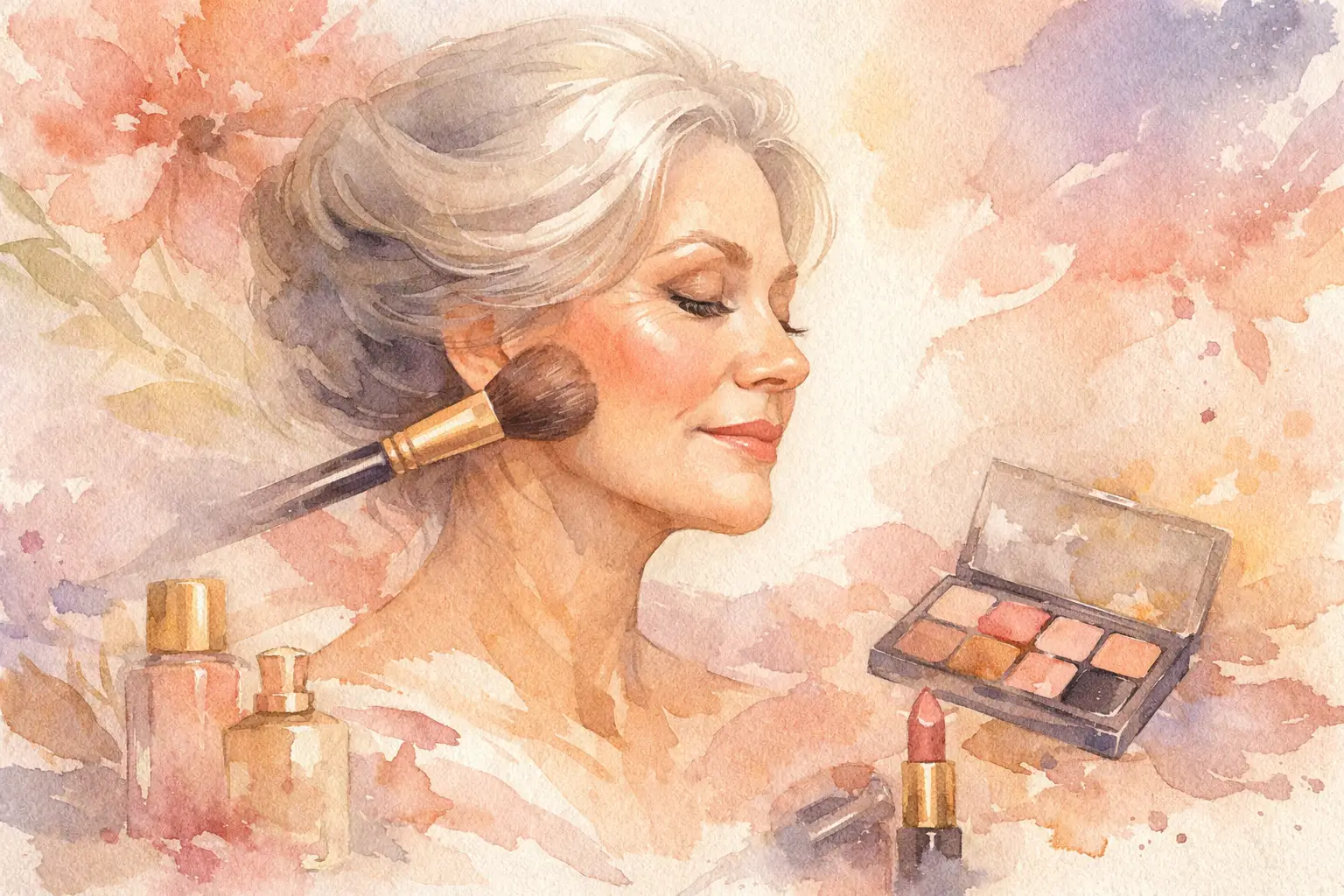
A full-coverage foundation that looked flawless at 32 can suddenly feel heavy at 52. That is usually the moment makeup stops being about covering everything and starts becoming about choosing texture, light, and placement with far more intention. The best makeup for mature skin does not try to mask the face. It brings back freshness, definition, and radiance while letting skin still look like skin.
That shift matters. Mature skin is not a problem to solve, but it does behave differently. Fine lines can catch pigment, drier areas can make base products cling, and loss of firmness can subtly change where color and contour are most flattering. A refined makeup routine works with those changes rather than fighting them.
What makeup for mature skin really needs
The biggest misconception is that mature skin needs more product. In practice, it usually needs better product selection and a lighter hand. As skin matures, natural oil production often decreases, which means formulas that once held beautifully can start to look flat, textured, or overly obvious by midday.
Coverage is still welcome, but the finish becomes more important than the promise on the label. Foundations described as matte, long-wear, or full-coverage can sometimes emphasize texture unless they are balanced with strong skin prep and very controlled application. More forgiving formulas tend to be serum foundations, luminous soft-matte finishes, skin tints with buildable pigment, and creamy concealers that move with the skin instead of setting into every expression line.
There is also the matter of dimension. Mature skin often looks most elegant when makeup restores contrast to the face. Brows may appear lighter, lashes softer, lip borders less defined, and cheeks less lifted than before. A polished result comes from reintroducing structure in subtle ways, not from piling on product.
Skin prep is where the finish begins
If makeup sits beautifully, skin prep did much of the work. This is especially true with makeup for mature skin, where dehydration and texture can make even expensive products underperform.
Start with gentle exfoliation in your regular skin routine, not necessarily right before makeup. Over-exfoliating can leave skin tight and reactive, which makes base makeup harder to control. On the day of application, focus on hydration and comfort. A lightweight hydrating serum followed by a nourishing moisturizer gives the skin a smoother surface and helps complexion products spread more evenly.
Primer can help, but it depends on the concern. If pores are the priority, a blurring primer used only where needed can refine the surface without flattening the whole face. If the skin feels dry or makeup tends to look tired after a few hours, a radiant or hydrating primer is often the better choice. Using several layers of skincare and then a heavy primer can make foundation slip, so restraint is part of the technique.
A useful rule is to let each layer settle. When products are rushed, they tend to pill or separate. A few extra minutes between moisturizer and foundation can make the final result look far more expensive.
Foundation should perfect, not mask
A beautiful base on mature skin rarely looks thick. It looks balanced, even, and quietly radiant. That is why application method matters as much as formula.
Apply foundation where you need it most, usually around the center of the face, and blend outward. This keeps coverage concentrated where redness or discoloration is more noticeable while allowing the outer face to stay lighter and more natural. Using a damp sponge or a soft buffing brush can help sheer out the product so it melts into the skin rather than sitting on top of it.
If there is significant pigmentation, it is often more flattering to use a lighter layer of foundation and then add pinpoint concealing only where needed. That approach creates a polished finish without the weight of an all-over heavy base.
Shade choice deserves extra care. A foundation that is too light can make the complexion look flat and tired, while one that is too dark can appear obvious around areas of natural volume loss. A close match that adds a touch of warmth tends to be the most elegant.
Concealer and powder without heaviness
Concealer is best used strategically. Under the eyes, choose a creamy, flexible formula and place it mainly on the inner corner and where shadow naturally falls. Bringing concealer all the way across the under-eye in a dense layer often makes lines look more pronounced.
Powder should be selective, not automatic. A fine-milled powder pressed lightly into the sides of the nose, chin, or forehead may be enough. Many mature complexions look fresher when the cheeks are left with a natural sheen. If you prefer a more perfected finish, use the smallest amount possible and avoid over-powdering under the eyes.
The most flattering textures for color
Texture changes everything. Powder is not off-limits for mature skin, but cream and liquid formulas are often more forgiving because they blend into the skin and maintain a softer finish.
Blush is one of the most transformative products in a mature makeup routine. A cream blush placed slightly higher on the cheek can bring life back to the face instantly. Rose, soft berry, peach, and muted coral tones tend to flatter widely, though the best shade depends on skin tone and the rest of the makeup look. The key is placement that lifts rather than drags the face downward.
Bronzer should add warmth, not sharp sculpting. Harsh contour can look severe on mature skin, especially in daylight. A soft cream bronzer or finely milled powder bronzer blended around the perimeter of the face and lightly under the cheekbone gives definition without looking theatrical.
Highlighter is where restraint pays off. Large shimmer particles can emphasize texture, so a refined cream or liquid illuminator with a satin sheen is typically more flattering. Think glow, not glitter.
Eyes that look lifted and elegant
Eye makeup often needs the biggest adjustment over time. Hooding, dryness, or fine lines can change how products sit and how shapes read on the face. The goal is not to recreate the techniques of younger skin, but to adapt them.
Softer shadows usually outperform very dry, heavily pigmented powders. Satin and matte finishes in taupe, cocoa, soft bronze, rose brown, and muted plum can define the eye without making the lid look crepey. Very dark shadow all around the eye can shrink it, while a medium tone placed thoughtfully in the outer corner and crease area creates lift.
Eyeliner also benefits from a lighter approach. A thick, hard line can overpower the eye and draw attention to texture. A softly smudged liner close to the lash line gives definition while staying elegant. Brown, charcoal, deep olive, and soft black-brown are often more flattering than an intense jet black.
Mascara should separate and define. Heavy layers can weigh lashes down, especially if lashes have become finer. Curling the lashes first and focusing mascara at the roots can open the eyes beautifully.
Brows and lips restore polish
Well-shaped brows are quietly transformative. As brows thin or lose color, the face can appear less structured. Use fine, hair-like strokes and avoid overfilling the front of the brow. A shape that is softly lifted and balanced will frame the face far more effectively than a dark, blocky brow.
Lips also change with time, often becoming drier with less defined edges. Satin lipsticks, balmy lip colors, and creamy pencils tend to be more flattering than very dry matte formulas. A lip liner close to your natural lip tone can redefine the shape subtly and prevent feathering. If strong lip color is your signature, keep it – just choose formulas with comfort and flexibility.
Common mistakes with makeup for mature skin
Most makeup mistakes on mature skin come down to excess. Too much foundation, too much powder, too much shimmer, or too much contrast can all make the face look more made-up and less refined.
Another common issue is following trends without adjusting them for real life. Techniques designed for studio lighting or social media close-ups do not always translate well in natural daylight. Baking, aggressive contouring, and ultra-matte finishes can look impressive on camera but often feel heavy and aging in person.
The more luxurious result usually comes from editing. One excellent skin product, one flattering cream blush, a beautifully blended eye, and a polished lip often look more sophisticated than a complex routine with ten visible steps.
There is also value in professional application when the occasion calls for it. For events, photography, or evenings where you want every detail considered, expert hands can tailor placement, texture, and longevity with a precision that makes a visible difference. At Rodeo Drive Beauty, that approach to makeup is always centered on the individual face, the setting, and the finish you want to carry with confidence.
Mature skin does not ask for less glamour. It asks for better judgment, better textures, and a more refined sense of balance. When makeup respects the skin in front of it, the result is not just flattering. It feels modern, polished, and entirely your own.