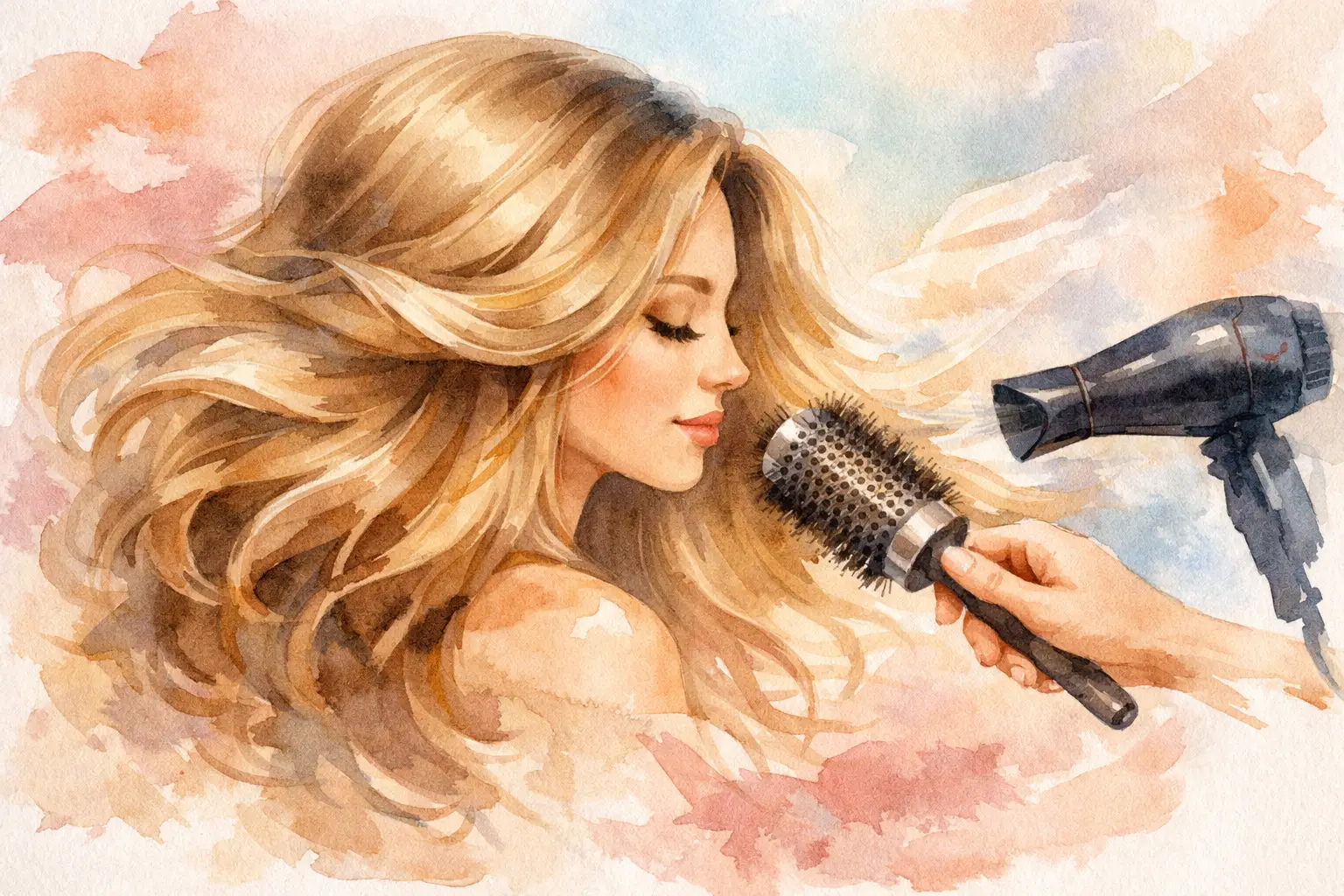
You can tell when a blowout has been done properly – the hair moves beautifully, the roots sit lifted instead of flat, and the finish looks polished without feeling stiff. The challenge is what happens after day one. If you have ever stepped out of the salon with flawless volume and then watched it fall by the next morning, learning how to maintain blowout longer comes down to a few precise habits, not luck.
A long-lasting blowout starts with respecting the style once it is finished. Hair that has been smoothed, shaped, and set with heat is at its best when it is disturbed as little as possible. The more friction, moisture, oil, and unnecessary handling it picks up, the faster that smooth finish softens into frizz, bends, or flat roots. The good news is that with the right aftercare, a premium blowout can stay elegant for several days.
How to maintain blowout longer from the first day
The first few hours matter more than most people realize. Freshly blown-out hair still responds to humidity, sweat, and pressure. If you want the style to last, avoid tying it up right away, tucking it tightly behind your ears for long periods, or running your hands through it every few minutes. These small habits leave dents and transfer oil faster than you think.
If you have a workout planned, timing matters. A blowout done before high-intensity exercise rarely lasts as well as one done after. If rescheduling is not realistic, choose lower-heat movement that will not soak the scalp. Even a perfect salon finish has limits when faced with heavy perspiration.
The environment matters too. Humidity is often the fastest way to shorten the life of a blowout, especially if your hair has natural texture, wave, or a tendency to frizz. If you are spending time outdoors in damp weather, or moving between air conditioning and heat, it helps to think preventively rather than reactively.
The sleep habits that protect your blowout
Nighttime is where most blowouts are lost. Tossing on cotton pillowcases roughs up the cuticle, flattens volume, and creates unnecessary friction. A silk or satin pillowcase is one of the simplest upgrades you can make if you want your style to hold its shape.
How you secure the hair also makes a difference. Wrapping it too tightly can leave marks, while leaving it completely loose may create tangling and collapsed roots. For many people, the best middle ground is a very loose high ponytail, often called a pineapple, secured with a soft silk scrunchie. If your blowout is sleek and straight, a gentle low wrap can work. If it is bouncy and full, using large, loose sections keeps movement in the hair rather than crushing it.
Sleeping with damp hair is an obvious no, but even slightly sweaty roots from a warm room can shorten the style. A cooler bedroom helps more than people expect. When the scalp stays dry overnight, the blowout usually looks cleaner and fresher the next day.
If your hair gets flat overnight
Do not reach for a flat iron first. Most second-day hair needs root revival, not more smoothing through the ends. Flip your head over, use a cool setting on the dryer for a minute or two, and lift the roots with your fingers or a large round brush. That often restores shape without adding damage.
Product choices make or break longevity
If you are trying to figure out how to maintain blowout longer, product restraint is part of the answer. Too much serum, oil, cream, or hairspray can collapse the style just as quickly as no product at all. Blowouts hold best when the hair feels light, touchable, and controlled.
Dry shampoo is usually the most useful product to have on hand, but the timing matters. Many people wait until the roots already look oily, then overspray. A better approach is to use a light amount before the scalp looks greasy, especially at the crown and hairline. This absorbs oil before it weighs the style down and helps preserve lift where it matters most.
Texture spray can also help, particularly if your blowout includes body or soft bends. The key is choosing a refined formula that adds airy support instead of a gritty finish. If your hair is already dry or chemically processed, use it sparingly and focus it at the roots or mid-lengths rather than all over.
Heavy oils are usually the first thing to rethink. A drop on the ends can be helpful if your hair is thirsty, but too much will separate the style and make the blowout look lived-in too soon. The same is true of leave-in creams. They can be excellent before styling, but after a blowout, less is usually more.
Showering without ruining the style
You do not need to skip your shower to preserve your hair, but you do need to protect it properly. Steam alone can soften the style, especially around the front hairline and nape. A proper shower cap with a secure fit is essential, not optional.
If your shower tends to get very steamy, reduce the heat slightly and keep your hair fully covered. For clients with naturally curly or frizz-prone hair, this matters even more. The smoother your hair had to be blown out in the first place, the more responsive it will be to moisture in the air.
Face washing can also affect the blowout if water repeatedly reaches the roots. Using a soft headband or wrist towels may sound minor, but details like this preserve polished hair for longer.
When to touch up and when to leave it alone
A common mistake is over-styling on day two and day three. The instinct is understandable – one bend appears out of place, and suddenly the entire head gets reworked with hot tools. That usually leads to dry ends and a style that looks less luxurious, not more.
Targeted touch-ups are far more effective. If the front sections have dropped, refresh only those pieces with a large round brush or one quick pass of a hot tool on low to medium heat. If the crown is flat, focus there rather than smoothing the lengths again. Precision preserves the finish and keeps the hair healthier.
There is also a point where the blowout changes rather than fails. Day-one hair may be sleek and full, while day-three hair becomes softer and more relaxed. That is not necessarily a problem. Sometimes the best way to extend a blowout is to restyle it slightly instead of forcing it to look brand new. Loose waves, a polished low ponytail, or a refined half-up style can all work beautifully with second- or third-day hair.
How to maintain blowout longer in humid weather
Humidity requires a different strategy. You want to minimize moisture exposure, avoid over-layering products, and carry a realistic expectation of what your hair can hold. Fine hair may lose volume faster, while thick or textured hair may swell at the roots or around the perimeter.
In this case, anti-frizz protection needs to be lightweight and intentional. A small amount of humidity-resistant finishing product can help, but piling on more once frizz appears usually backfires. Gentle brushing, controlled touch-ups, and keeping hair off damp collars or scarves can make a visible difference.
The salon work behind a blowout that lasts
Longevity is not only about home care. The quality of the blowout itself matters. Hair sectioning, tension, brush choice, product layering, and proper cooling all influence how long the style holds. Blowouts that fall immediately are often under-set, overworked, or not tailored to the hair type.
This is why expert care matters, especially if your hair is dense, extension-wearing, color-treated, or naturally textured. A refined blowout should be customized to your hair’s condition, the finish you want, and how many days you expect to wear it. At a luxury salon such as Rodeo Drive Beauty, that customization is part of the service, not an extra detail.
Good preparation also changes the result. Clarifying when there is buildup, choosing moisture carefully, and matching the finish to your natural pattern all help create a blowout with better staying power. Hair that is overloaded with residue or treated with the wrong weight of products rarely holds shape the way it should.
The habits that shorten a blowout fastest
If your blowout never seems to last, the issue is often a pattern rather than a product. Frequent touching, sleeping without protection, taking very hot showers, applying too much oil, and overusing hot tools are the usual culprits. So is trying to fight your natural hair behavior without adjusting expectations.
For example, if your scalp becomes oily quickly, you will need earlier dry shampoo use than someone with dry skin. If your hair is very thick and naturally wavy, preserving smoothness in humid weather may require more protective steps than it would for finer straight hair. A better routine is one built around your actual hair, not a generic rule.
The most elegant blowouts are not maintained with constant effort. They are preserved with a calm, thoughtful routine that protects the shape, keeps the roots fresh, and avoids unnecessary heat. Once you understand that balance, the style lasts longer and still looks soft, expensive, and easy – exactly as it should.