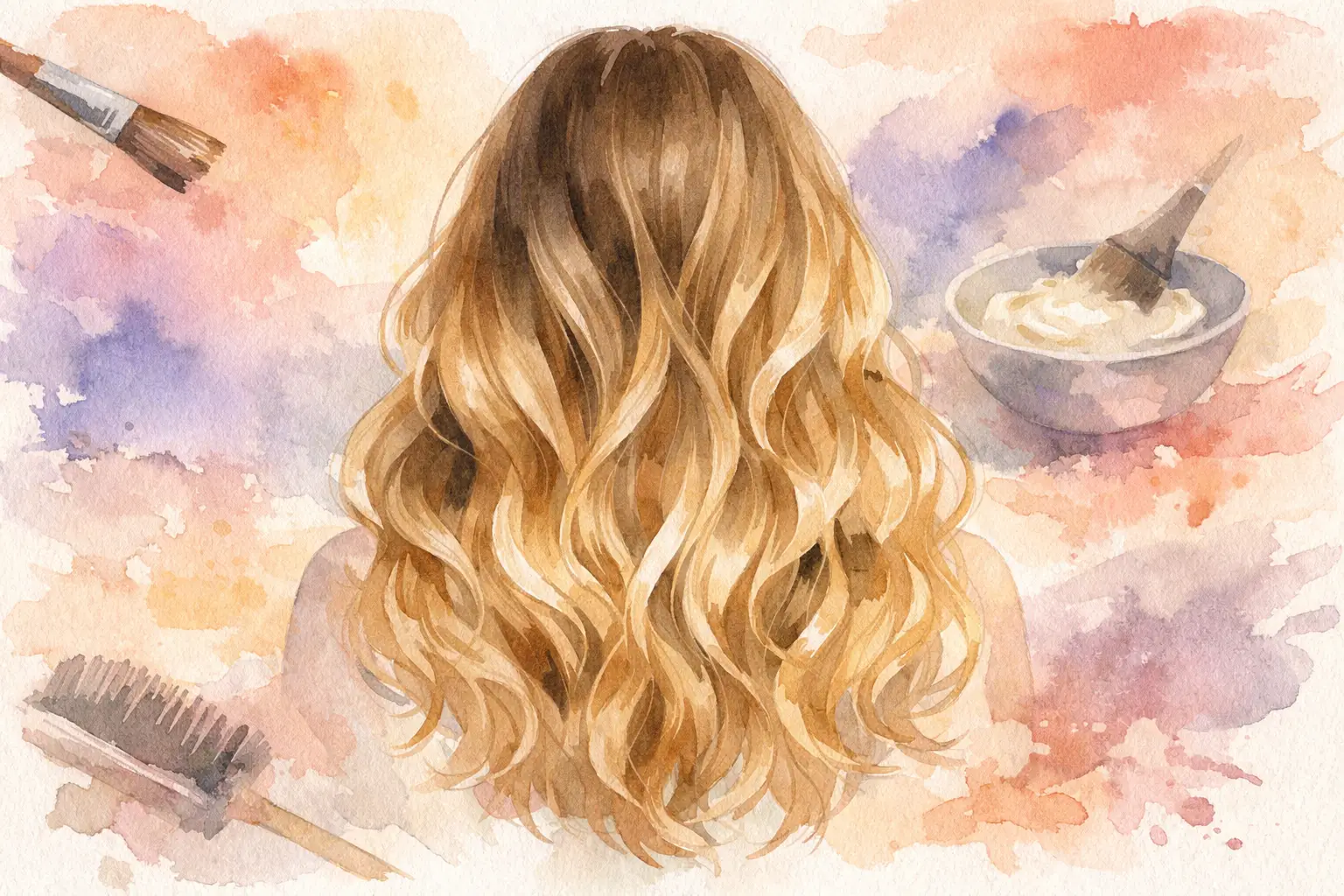
Fresh balayage has a very specific look when it is done well – expensive, dimensional, and effortless without ever seeming overworked. Keeping it that way is where most people either protect their investment beautifully or watch it turn brassy, dry, and uneven far too soon. This professional balayage maintenance guide is designed for anyone who wants salon-level results to last between appointments, with the kind of refined care that keeps color luminous rather than merely acceptable.
Why balayage needs a different maintenance approach
Balayage is often described as lower maintenance than traditional highlights, and that is true to a point. The grow-out is softer, there is no harsh line at the root, and appointments can usually be spaced out more comfortably. But lower maintenance does not mean no maintenance.
The hand-painted finish that makes balayage look so natural also depends on tone, placement, and contrast staying balanced. When the lightened sections become too warm, too dry, or too matte, the entire result loses its polish. What looked sunlit and seamless can start to look flat or tired, even if the grow-out still appears soft.
That is why a professional balayage maintenance guide should focus on preserving the quality of the hair as much as the color itself. Shine, hydration, bond integrity, and tone all work together. If one slips, the final look changes.
The professional balayage maintenance guide timing clients should follow
A beautiful balayage schedule depends on your base color, your desired brightness, your hair texture, and how styled you like your finish to look day to day. There is no single timeline that suits everyone.
For most clients, toner refresh appointments are needed more often than full balayage sessions. A gloss or toner every 6 to 8 weeks can keep the blonde, caramel, or beige pieces refined and controlled without repeating the entire lightening service. Full balayage maintenance is often best scheduled around every 10 to 16 weeks, although very bright blondes may prefer shorter intervals.
If your balayage is intentionally subtle, you may be able to stretch longer. If you wear your hair sleek, spend time in the sun, or wash frequently, fade tends to show sooner. The more elevated and precise you want the finish to remain, the more strategic your maintenance should be.
When to book sooner rather than later
There are a few signs that suggest waiting will cost you more in the long run. If your ends feel noticeably rough, your ribbons of lightness look yellow or orange, or your face-framing pieces no longer blend cleanly, it is time to return to the salon. Delaying too long can mean more corrective toning, more intensive treatment, and sometimes more compromise on your next color appointment.
Wash habits that protect tone and softness
The way you wash balayaged hair has a direct impact on how expensive it continues to look. Frequent shampooing, very hot water, and heavy product buildup all shorten the life of your tone.
Most balayage clients do best washing two to three times per week rather than daily. This helps preserve the salon gloss and prevents the lightened areas from becoming stripped and porous. When you do wash, lukewarm water is far kinder to both your color and your cuticle than high heat.
Shampoo and conditioner matter more than branding language. Look for professional formulas made for color-treated hair, especially those that support moisture and pH balance. If your balayage runs cool or neutral, a purple or blue toning product may help, but only when used correctly. Overusing pigmented shampoo can leave the hair dull, dry, or slightly muddy. It is a maintenance tool, not a replacement for professional toning.
Heat styling can either preserve balayage or age it fast
Balayage usually looks its best when there is movement and shine through the mid-lengths and ends. Unfortunately, those are also the sections most vulnerable to heat damage because they have already been lightened.
Blow-dryers, curling irons, and flat irons are not the enemy when used with care. The real issue is repeated high heat without protection. A premium heat protectant is non-negotiable, especially on the lighter pieces around the face and through the ends. Lower temperature settings often produce a better long-term result because they smooth the hair without scorching the cuticle.
If your hair starts feeling coarse or loses that reflective finish even right after styling, the issue may not be your color at all. It may be heat fatigue. In those cases, reducing thermal styling for a few weeks and adding a restorative salon treatment can make balayage look fresher again without adding more color.
Hydration and bond repair are part of balayage upkeep
A refined balayage finish depends on healthy texture. Even the most expertly painted color will not look luxurious on dehydrated, compromised hair.
At home, that means using a weekly mask tailored to your hair’s needs. Some clients need moisture most. Others need bond support or light protein reinforcement. The trade-off matters. Too much moisture can make fine hair limp, while too much protein can leave it stiff. The right balance depends on your hair density, porosity, and styling routine.
In-salon treatments are where maintenance becomes far more effective. Professional masks, glossing services, bond-building treatments, and scalp-focused care can restore softness and shine at a level home care rarely matches. For clients who invest in premium balayage, adding treatment appointments between major color sessions is usually the difference between good longevity and flawless longevity.
Sun, sea, and hard water change balayage faster than expected
This is one of the most overlooked sections in any professional balayage maintenance guide. Environmental exposure has a major effect on tone.
Sunlight can fade a toner quickly and expose unwanted warmth. Chlorine can make blonde pieces feel dry and rough. Salt water may leave the hair tangled and porous. Hard water can deposit minerals that distort color and reduce shine, especially on lighter balayage.
If you spend time at the beach, by the pool, or traveling frequently, a few protective habits are worth adopting. Rinse hair before and after swimming when possible. Wear a hat in strong sun. Use a detox or clarifying treatment occasionally, but not so often that you strip the hair. This is another area where it depends – some clients need monthly clarification, while others only need it seasonally.
Haircuts matter more than many balayage clients realize
Balayage is a color service, but the haircut supports the illusion. The painted brightness is placed to catch shape, softness, and movement. When the cut grows out or the ends start to split, the color can suddenly look less intentional.
A trim every 8 to 12 weeks helps keep the silhouette polished and prevents weakened ends from making the balayage appear frayed. This is especially true for layered cuts, face-framing pieces, and longer lengths where the lightness sits prominently through the bottom half of the hair.
Healthy ends reflect light better. That alone can make old balayage look newer.
How to talk to your stylist about balayage maintenance
The best maintenance plans are personalized. A client who wants creamy brightness with cool dimension needs a different strategy than someone who prefers warm caramel softness. The right conversation with your stylist should go beyond asking how often to come back.
Discuss how much contrast you want to keep, whether you are willing to use toning products at home, how often you heat style, and whether your schedule allows for gloss appointments between full services. Be honest about your habits. If you know you swim often, wash daily after the gym, or spend summers in intense sun, your stylist can build a more realistic maintenance plan from the start.
At a premium salon, this is part of the service – not an extra detail you have to figure out alone. A tailored plan protects both the integrity of your hair and the quality of your result.
The most common balayage maintenance mistakes
Most balayage problems are not caused by one dramatic error. They come from small habits repeated over time.
Using random supermarket products, skipping heat protection, waiting months too long for a gloss, and overusing purple shampoo are common examples. So is assuming that if the root still looks blended, the balayage is still in excellent condition. Often, the fade shows first in the tone and texture, not in obvious regrowth.
Another mistake is chasing brightness at every visit without supporting the health of the hair in between. Sometimes the more sophisticated choice is not more lightener. It is a toner refresh, a trim, and a treatment that brings the whole finish back to life.
A luxury approach to professional balayage maintenance
True balayage maintenance is not about doing the bare minimum until your next appointment. It is about preserving the softness of the blend, the richness of the tone, and the touchable quality of the hair so the result continues to feel intentional.
For clients who expect a polished, high-end finish, maintenance should feel as curated as the original service. That might mean a gloss before an event, a bond treatment after summer travel, or a trim timed to keep the shape elegant. At Rodeo Drive Beauty, that standard of care is what allows premium color to remain refined long after the first appointment.
Balayage always looks best when it is treated like a luxury service after you leave the chair, not just while you are in it.